Updated September 2026. Written by Chris Grollnek.
How I Run Workplace Violence Prevention Training
Short answer. I walk your floor, talk to the people who actually run it, and teach your workforce to recognize the behavior that shows up before an incident, because that is where prevention happens. Nearly every workplace violence prevention training on the market starts at the moment of the attack. Mine starts weeks earlier, at the first thing a coworker noticed and did not know what to do with. It is built on the P.R.O. Model™, Prevention, Response, Options, which the U.S. Department of Justice selected as "A" national standard for active shooter prevention, for the Assistant United States Attorneys and across the Department, twice. People leave the room calmer than they arrived and knowing exactly what to do with a concern. That is the outcome I count.
If you run HR, operations, security or a facility, and you have a written plan in a binder that you are not sure anyone could execute on a Tuesday afternoon, this page is written for you.
In October 2026 the U.S. Secret Service published Preventing Targeted Workplace Violence, a 100-page guide that found 78 percent of workplace attackers had already concerned someone before they acted, and I wrote up what I took from all 100 pages.
Why does a compliant workplace violence plan still fail on the day it matters?
Because a plan describes what the organization intends to do, and an incident is decided by what the nearest six people actually do. I have read a great many workplace violence prevention plans that would satisfy any inspector. Named responsible parties, reporting procedures, post-incident review, the whole structure. They fail for one reason: the people on the floor were never taught what a concern looks like or given a way to raise one without feeling like they were accusing a colleague.
So the plan sits in the binder, the concern sits in someone’s chest, and the two never meet. Federal data gives that gap a number. The Bureau of Labor Statistics recorded 470 workplace homicides in 2024, up from 458 the year before, out of 5,070 fatal work injuries. Those are not random events. In the overwhelming majority, somebody near the person saw something first.
What do I look for when I walk your floor?
The same thing I look for in a school or a sanctuary, which is how people actually move and who actually sees them. A workplace has an advantage most buildings do not. You control who comes in, and you have supervisors whose job already includes noticing when somebody is not right. The trouble is that nobody has ever told those supervisors what they are looking at, so a real warning sign gets filed under having a rough month.
- The front door and the loading dock, because the plan names one and the building uses both.
- Where a terminated employee walks out, who walks with them, and whether their badge still works on Friday.
- Who is alone, the receptionist at lunch, the second shift lead at nine at night, the person who closes.
- The break room and the parking lot, where the behavior shows up long before it reaches a desk.
- Whether a supervisor has a path, a real one, to hand a concern upward without it becoming an investigation on day one.
- What happens to the report, because a reporting procedure that lands in a shared inbox nobody owns is not a procedure.
I am not there to grade your compliance. I am there to find the three or four places where a real concern would die on its way to someone who could act on it, and to close them.
What are the warning signs, and who actually sees them first?
Violence has a runway. The Cybersecurity and Infrastructure Security Agency publishes this as the Pathway to Violence, a progression of observable behavior drawn from decades of threat management research, and the Department of Homeland Security built the discipline of behavioral threat assessment and management on top of it. The finding is consistent. People who commit targeted violence at work are almost never invisible beforehand. They show it, and the people who see it are coworkers, not security.
That is the whole reason my training goes to the entire workforce and not only to a security team. In a company of four hundred, the person who first notices a colleague fixating on a grievance, talking about getting even, or suddenly withdrawing after a bad review is almost never the guard at the desk. It is the person who sits next to them. I teach that person what they are seeing, in plain language, and I give them somewhere to put it that does not feel like betrayal.

What does the law actually require of an employer?
Less than most people assume, and more than most plans deliver, and the gap between those two is where I work.
There is no specific federal OSHA standard for workplace violence. What exists is the General Duty Clause, Section 5(a)(1) of the Occupational Safety and Health Act, which requires every employer to provide a workplace free from recognized hazards that are causing or are likely to cause death or serious physical harm. OSHA cites employers under that clause when a workplace violence hazard was recognized and not addressed. Recognized is the operative word. Once a threat has been reported, the hazard is recognized, and the clock starts.
California went further. Since July 1, 2024, Labor Code section 6401.9 has required nearly every employer in the state to establish and maintain a written workplace violence prevention plan, train employees on it, identify and correct hazards, and review the plan for effectiveness, with a formal Cal/OSHA standard due for adoption by the end of 2026. Other states are watching California closely. If you operate there, this is already your obligation. If you do not, it is a preview.
Here is my honest read on all of it. Compliance is the floor. A plan that satisfies the statute and never reaches the person on the floor is compliance without prevention, and it is the first exhibit after the fact. I build the training so that the plan you already have becomes something your people can actually run.
What will I never do in your workplace?
I will not stage an attack on your employees. No surprise drills, no simulated gunfire, no actors in the lobby. That approach frightens people, it has hurt people, and it teaches nothing that plain instruction does not teach better.
I will not turn your receptionist into a guard or your supervisors into investigators. I will not profile your employees, and I will not hand you a checklist of personality traits to screen for, because that is not how this works and it creates exposure rather than reducing it.
I will not show victim photographs or use a real family’s worst day as a slide. And I will not sell you technology you do not need. If the fix is a badge deactivation procedure and a conversation with your front desk, that is what goes in the report.
How do I train a workforce that does not want to be there?
By respecting that they do not want to be there. Nobody signs up for a workplace violence session hoping to enjoy it. They arrive expecting an hour of fear and a compliance video, and the first thing I do is tell them they are getting neither.
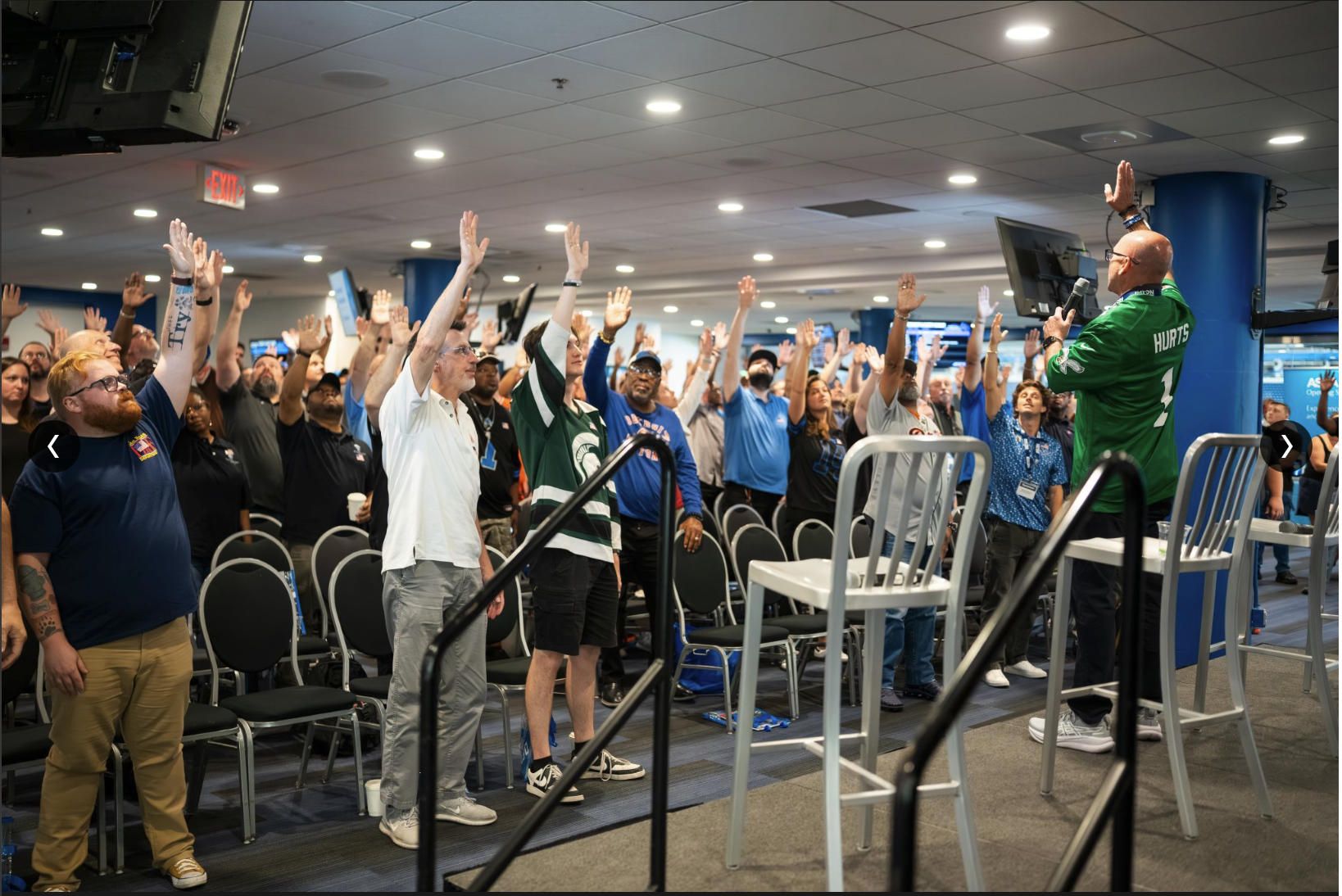
What they get is the three tenets of the P.R.O. Model™ in language a shift lead can repeat. Prevention, which is how to recognize a concern and where to take it. Response, which is what to do in the first ninety seconds if something begins, without tactics that belong to a tactical team. Options, which is the set of choices every person has in every room that nobody ever showed them. I teach it with stories from the incidents I have worked and studied, not with statistics, and I answer every question in the room, including the ones people are embarrassed to ask.
Former U.S. Marine and retired police detective corporal, I was on scene at an active shooter incident, and I have spent the years since studying how these events start rather than how they end. That is what I bring into your break room. When it is over, people tell me the same thing in different words. They feel steadier, and they know what to do. That is the whole point.
Questions HR and operations leaders ask me most
We already have a plan. Do we need this?
Probably, and the way to find out is to ask a supervisor on the floor what they would do with a concern about a coworker this afternoon. If the answer is a confident sentence, you are in good shape. If it is a pause, the plan has not reached them yet.
How long does it take?
Usually a day on site for the walkthrough and conversations, then a half day to a full day of training, split across shifts if you run more than one. I work around your operation, not through it.
Will this create liability by acknowledging a risk?
The opposite. Under the General Duty Clause the hazard is recognized the moment anyone reports a concern. What creates exposure is having recognized it and done nothing. Training is the record that you acted.
Can you help with a termination we are worried about?
Yes. That is one of the most common calls I get, and one of the highest value hours I spend, because a separation handled well is the single most effective prevention step most companies never plan for.
Do you work with companies outside Texas?
Yes. I am based in North Richland Hills, Texas, and I travel nationwide, in person and by webinar.
What does this cost?
It depends on size and shifts, and the first conversation is free. Program details and pricing for organizations live at Active Shooter Prevention Project.
Ready to know your building?
Tell me about your operation, your shifts, and the thing that has been sitting quietly in the back of your mind. I will tell you honestly whether you need me or whether an afternoon with your own leadership and Cal/OSHA’s model plan gets you most of the way there.
Program details, pricing and the federal contractor version of this work live on the Active Shooter Prevention Project workplace violence page. To reach me directly, use the contact page. Related work: threat assessment and prevention, active shooter prevention training, and house of worship security.
I have also written about what this looks like where public safety converges, on America’s 250th Anniversary Gala at Camp Pendleton, and our team covers the agency side on the ASPP™ page on active shooter prevention for public safety.
Your people deserve to work without worry. #NEVERHERE™