Chris Grollnek Senate Testimony: The 2002 Counterterrorism Record


The record behind Chris Grollnek Senate testimony begins in 2002, in the Hart Senate Office Building, and it starts a long way from active shooter prevention.
Why the briefing happened at all
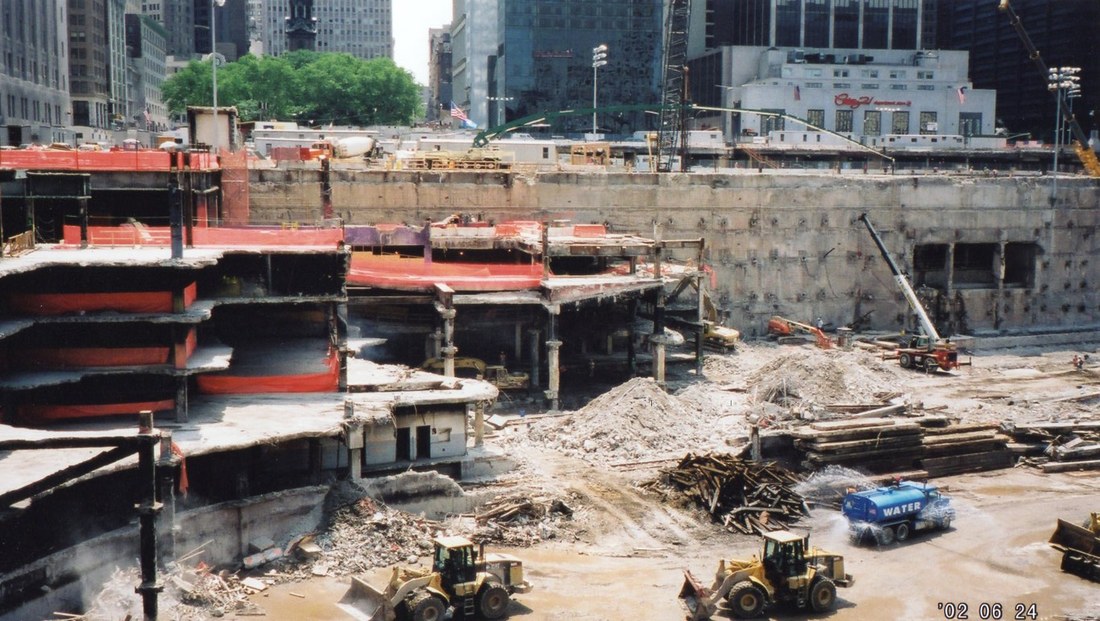
That photograph was taken at Ground Zero on 24 June 2002.
Nine months after September 11, the site was still being cleared. Cranes, haul trucks, and a ramp running down into the pit. The date is stamped in the corner of the frame because it was shot on film, which is its own reminder of how long ago this was.
This is why the work exists.
The response that day was extraordinary, and it was not enough. That is not a criticism of anyone who ran toward it. It is the plain arithmetic of arriving after something has already started.
Prevention is the only part of this work that happens while there is still time. Standing at the edge of that pit in 2002, that was already the argument, and more than twenty years later it is still the argument. Everything on this site comes back to it.
September 11 is the reason. It has never been a talking point.
The testimony came out of that period, and it answered the question the country was asking everywhere at once. The people we send toward this, what have we actually trained them to do?
In 2002 the honest answer was uncomfortable. Counterterrorism training had been built around a threat that had already changed shape. Curricula were written for scenarios that no longer described the problem, and the people expected to act had been prepared for a different decade.
That gap is the reason for the briefing. Not policy in the abstract, and not a hearing for its own sake. A specific, documented argument that training had fallen behind the threat, delivered to the people who could fund the fix.
Everything since has been the same argument at a different scale. The threat changed again, from coordinated terrorism to the lone attacker inside an ordinary building, and training lagged again. Prevention is what closes that gap, because it is the only part of the work that happens while there is still time.
What the Chris Grollnek Senate testimony covered
The Chris Grollnek Senate testimony was convened by Senator Kay Bailey Hutchison. The subject was the counterterrorism training needs of the United States, and the gap between what first responders were being taught and what the threat actually required.
This was 2002. The country was still rebuilding its assumptions after 9/11, and the question in front of the Senate was blunt. Who trains the people we send toward the danger, and does that training match what is coming?
The CSIS briefing that came first
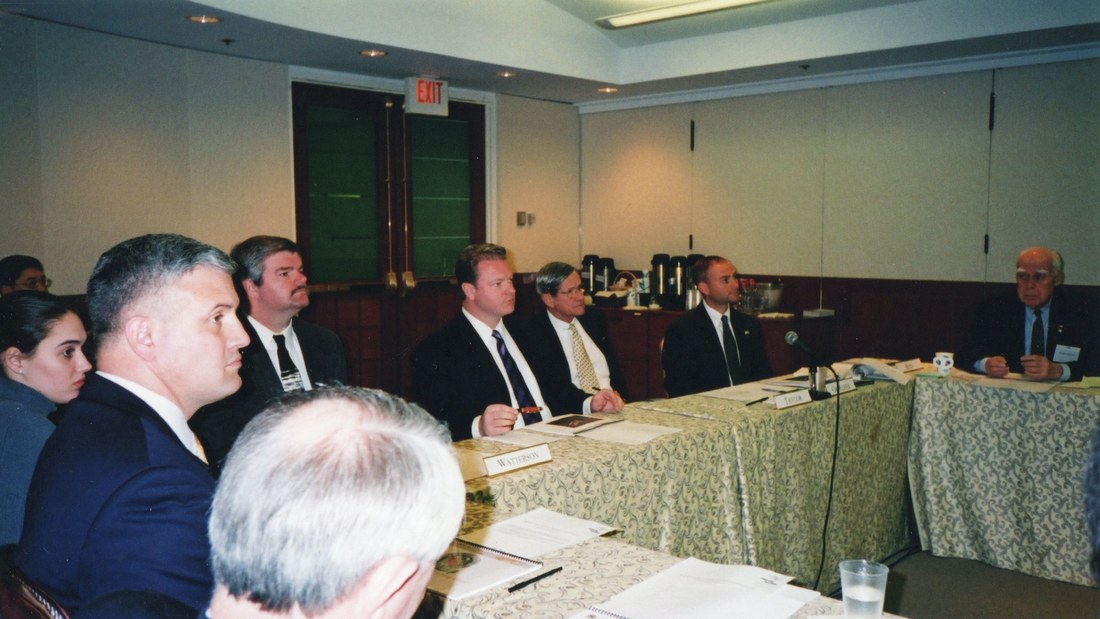
Before the Senate, there was the Center for Strategic and International Studies.
CSIS invited a briefing for Ph.D. and senior executive staff of the United States government, working alongside Dr. Bill Taylor. The subjects were subterranean training, complex curriculum development, and public instruction.
That work matters because it explains the method. Curriculum development is the discipline of turning hard-won operational knowledge into something an organization can teach itself. It is the same discipline that later produced the P.R.O. Model™.
The same period included a briefing to the National Security Council. Different room, same argument. The training did not match the threat, and the difference was going to be paid for by whoever arrived first.
Who was in the room
It was one hearing, at the Hart Senate Office Building, convened by Senator Kay Bailey Hutchison. It seated members of House Ways and Means and the joint Department of Homeland Security committee then forming under Representative Peter King, along with invited personnel, and it followed a working session with the Center for Strategic and International Studies.
Taken together, these are not speaking engagements. They are moments where a legislative body needed an answer about training and asked someone who had built it.
Why the 2002 record still matters
Credentials age badly when they are only titles. This record is different, because the argument made to the Senate in 2002 is the argument still being made now.
Response training is a partner, not a plan. An organization that measures itself only by how fast it reacts has already accepted the incident. Prevention is the part that happens before anyone has to react at all.
That conviction became the P.R.O. Model™, A national standard selected by the Department of Justice for 2022 to 2025, and again for 2026 to 2030.
The Chris Grollnek Senate testimony was the first time that case was made to people who could act on it. It has been made many times since.
The original company founders | Contact
Reference: the Center for Strategic and International Studies, Washington DC.
Share This Story, Choose Your Platform!
November 6, 2026

November 6, 2026
November 6, 2026