Active Shooter Expert Standard

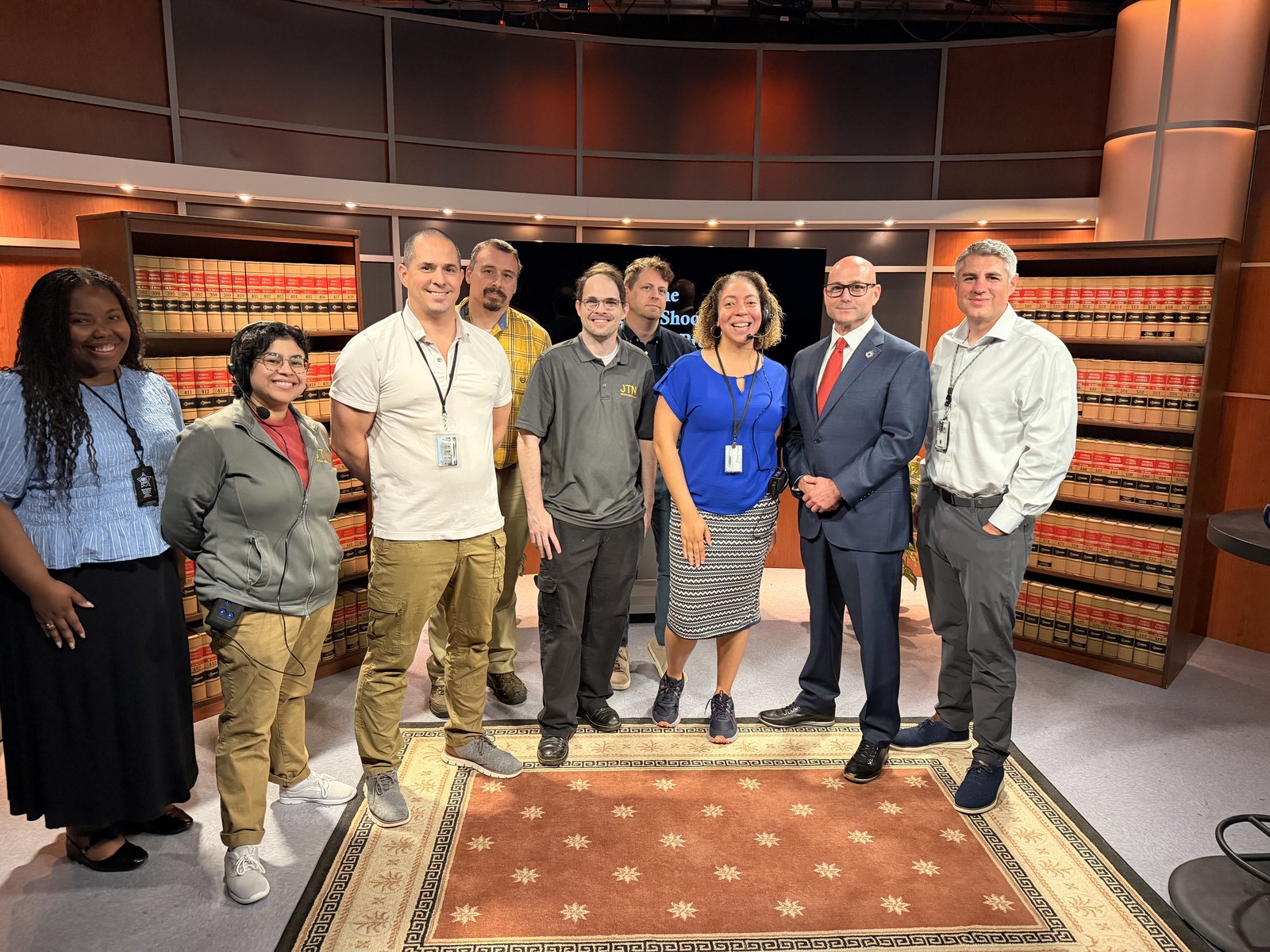
Active Shooter Expert Chris Grollnek and the DOJ-Recognized “A” National Standard
For more than a decade I have studied how these attacks happen and how to stop them. Here is the standard the Department of Justice has now recognized twice, and what it means for you.
By Chris Grollnek, Former U.S. Marine and retired police detective corporal, Active Shooter Prevention Expert · Published June 27, 2026
I am Chris Grollnek, an active shooter expert, and the P.R.O. Model™ I built was selected by the United States Department of Justice as an “A” National Standard, not once but twice, for 2022 through 2025 and again for 2026 through 2030. This is how that recognition happened, what it actually means, and why it should matter to anyone responsible for protecting people.
I want to be careful with that word “recognition,” because it gets thrown around loosely. A logo on a website is not recognition. A paid award is not recognition. What I am describing is something different: an approach to active shooter prevention that the Department of Justice independently selected as an “A” National Standard across two separate cycles. I did not set out to win a designation. I set out to stop people from dying in preventable attacks, and the standard followed from the work. Let me walk you through it the way I would if we were sitting across a table, because the first conversation is always free.
Who I Am, and How I Got Here
My background is not academic theory. I am a Former U.S. Marine and a retired police detective corporal, and both of those careers shaped how I think about violence. In the Marine Corps, I served as a Senior Drill Instructor at Parris Island and was meritoriously promoted to Staff Sergeant, which taught me that preparation under pressure is not a talent; it is a trained habit. In law enforcement, I worked cases up close, including investigations I later presented for federal prosecution, and I learned that the difference between a tragedy and a near miss is almost always something that happened long before anyone called 911.
That conviction sent me back to school. I earned my M.S. in 2012, and my graduate capstone studied the active shooter phenomenon directly, before “active shooter” was a phrase most people used in everyday conversation. I wanted to know why these attacks kept happening, why the response always seemed to arrive a few minutes too late, and whether anything in the timeline could actually be changed. The answer, over and over, was yes. The warning signs were there. The seams in the security were there. What was missing was a standard that treated prevention as the main event rather than an afterthought.
So I built one. Everything I do today as an active shooter expert, the training, the assessments, the speaking, the expert testimony, grows out of that single idea: the only intervention that reliably changes the outcome is the one that happens before the trigger is ever pulled.
What “A” National Standard Actually Means
Here is where I have to be precise, because the language matters. The P.R.O. Model™ is an “A” National Standard. That is the literal indefinite article “A,” a recognized national approach to proactive prevention. It is not a letter grade, and I never describe it as one. It is not “the” national standard in some official monopoly sense either. It is an approach the Department of Justice selected as a national standard for prevention, doing so twice: for the 2022 through 2025 cycle and again for 2026 through 2030.
Why does being selected twice matter so much to me? Because anyone can have a good year. A second selection, across a new cycle and a fresh review, says the approach held up. It says the prevention-first logic was not a fluke or a moment of good timing. For the organizations I work with, that durability is the point. When you adopt a standard for something as serious as protecting your people, you want one that has been tested and re-confirmed, not one that was fashionable once.
That recognition is also the reason the DOJ connection comes up in almost every serious conversation I have. When a school board, a congregation, or a corporate security team is deciding whom to trust, the fact that the underlying methodology carries an independent federal validation changes the conversation. It moves the discussion from “do we believe this person” to “we are building on something that has already been vetted.”
I should also be clear about what earning that designation required, because it was not a form and a fee. It meant demonstrating that the approach is proactive rather than reactive, that it is teachable and repeatable across wildly different environments, and that it holds up to outside scrutiny. A standard is only useful if it works the same way in a rural church, a downtown office tower, and a suburban school. Proving that consistency, and then proving it again for a second cycle, is the part I am most proud of, because consistency is what lets an organization trust the plan when no expert is standing in the room with them.
The P.R.O. Model™: Prevention, Response, Options
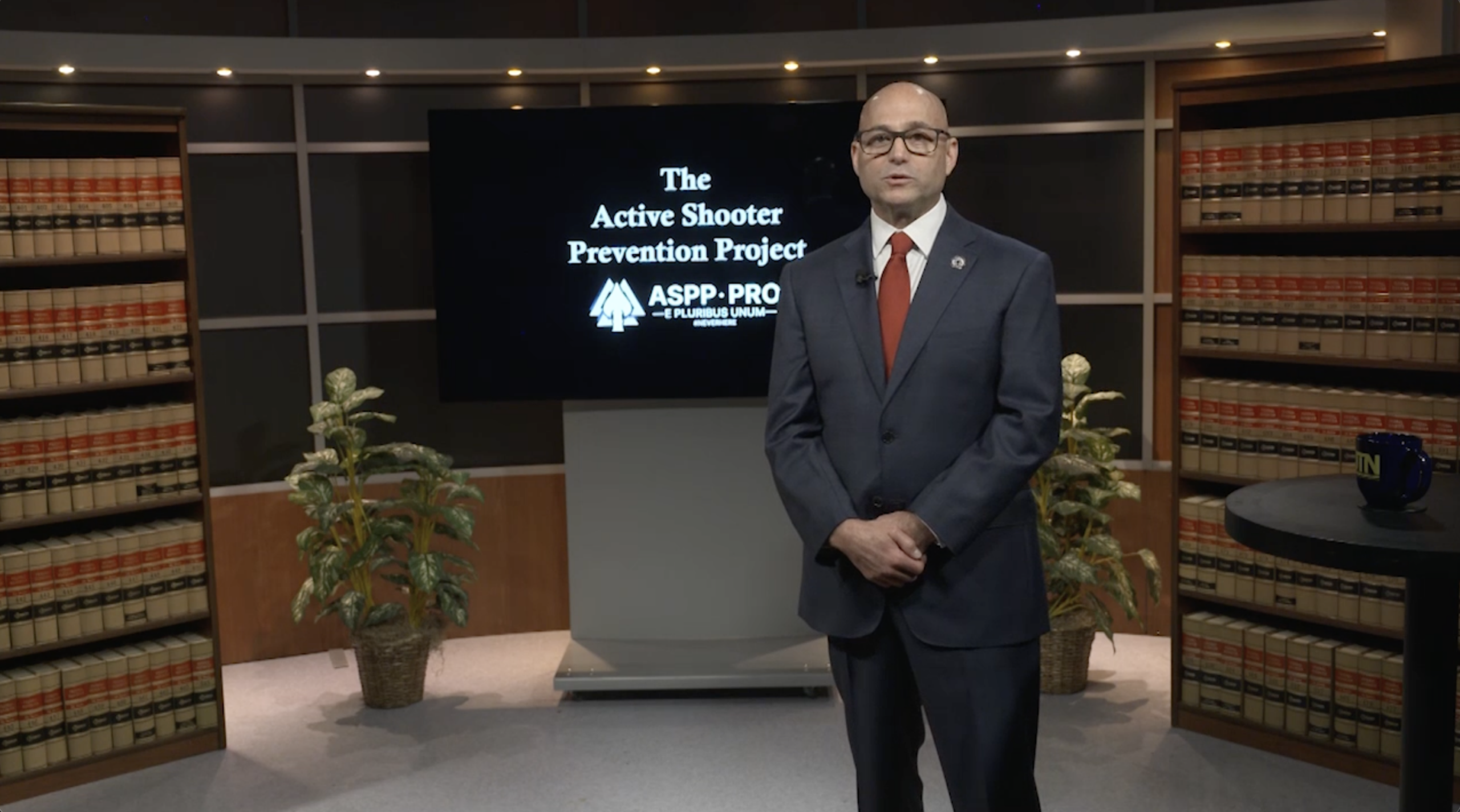
Active shooter expert Chris Grollnek presenting the P.R.O. Model™ for the Active Shooter Prevention Project™.
So what is the standard? The P.R.O. Model™ stands for Prevention, Response, Options, and the order is deliberate. Prevention comes first because it is where the outcome is actually decided. Response is what trained people do in the moments that matter. Options are the protective measures that buy time and save lives when seconds count. You can read the full framework on the P.R.O. Model™ page at ASPP™™™, but the heart of it is simple to say and hard to do: build a single, layered, all-hazards system instead of a pile of disconnected parts.
Most security programs I am asked to review are not wrong, they are just incomplete. A camera here, an access badge there, a binder nobody has opened since the last inspection, a drill once a year. None of those things is bad. The problem is that they do not add up, because no one connected them and no one owns the whole. Attackers do not exploit a single weak component. They exploit the seams between components, the propped door with no camera, the threat report that reaches no decision-maker, the alarm no one is trained to act on. The P.R.O. Model™ is the connective tissue that turns scattered parts into a working defense.
I did not build it alone, and that is by design. The standard is carried by the ASPP Community of Experts, hundreds of years of combined experience across prevention, training, intelligence, and physical security, all organized around the same approach. When you work with me, you are not getting one person’s opinion. You are getting a community aligned to one proven standard.
Three Documented Prevention Saves
I am cautious about claims because in this field, overclaiming costs trust, and trust is the only currency that matters. So I will say exactly what is true: the approach has three documented prevention saves. Three real situations where the warning signs were caught, the right people acted, and an attack that could have happened did not. Nothing made the news, because nothing happened. That is what success looks like in prevention. It is invisible by definition.
Those saves are the reason I keep doing this. It is easy to talk about prevention in the abstract. It is something else to know that a specific group of people went home to their families because a plan worked the way it was supposed to. When people ask me what evidence there is that prevention beats response, those quiet, documented outcomes are the answer I am proudest of.
This is also why I push back, gently but firmly, on the idea that nothing can be done. The most dangerous belief I encounter is not fear. It is resignation, the assumption that these events are random acts of nature. They are not. They have a runway of warning signs, and that runway is exactly where a trained organization can intervene.
When I share those three saves in a room, I watch something shift. People stop picturing themselves as helpless and start picturing themselves as capable. That shift, from resignation to readiness, is the real product of everything I do. The DOJ recognition gives the approach its credibility, but the saves are what give people the belief that prevention is worth their time, their training, and their attention.
Training That Works, and Why I Keep It Affordable
Recognition is meaningless if it does not reach the people who need it, so let me talk about the work itself. The core of what I do is active shooter prevention training, and I build it to transfer real knowledge from real events, not to scare a room and leave. Good active shooter prevention training prepares people to recognize the warning signs; threat assessment training gives a small team the shared language to evaluate a concern before it becomes an emergency; and response training compresses the chaos of a crisis into a set of practiced actions. Preparedness training ties it together so the response is automatic when it has to be.
I am told fairly often that my sessions are not what people expected. They expected fear. What they get is clarity, and even some energy, because confidence is more useful than dread. My goal in every room is to replace the belief that “it will never happen here” with a plan, and to do it in a way that everyone, at every skill level, can actually use.
Cost should never be the reason a community stays unprepared, and that is not a slogan for me; it is a pricing decision. I frequently deliver training to houses of worship and nonprofits at half my base rate because the organizations most often targeted are the ones with the thinnest budgets. At the same time, the approach scales. The same standard that protects a Fortune 500 campus protects a ten-person business, and it extends to school districts, hospital systems, government agencies, and beyond. What changes is the scope of the program, never the seriousness of the protection.
I am asked all the time whether smaller organizations really need the same rigor as a large enterprise, and my honest answer is that they often need it more. A Fortune 500 company usually has a security department. A small congregation or a community nonprofit usually has a volunteer who cares deeply and a budget that does not stretch. That is exactly the gap I built the affordable tier to close. Whether you have ten people or ten thousand, the threat assessment training, the response training, and the prevention plan are drawn from the same standard. I simply right-size the scope so that protecting your people is a decision you can actually afford to make.
How to Fund the Work
The next question is almost always money, and it has a better answer than most people expect. There is federal grant funding that exists specifically to pay for prevention training and protection, and most eligible organizations never claim it. I recently published a complete walkthrough of active shooter prevention grant funding that explains where the money is, what it can pay for, and why most applications fail. If you lead a house of worship, a school, or a nonprofit, that guide is the fastest way to see whether funding is within reach for you.
I will be just as careful here as I am everywhere else: no one can guarantee a grant award, and I never promise one. What I can do is help improve your competitiveness with a rigorous vulnerability assessment and a prevention-first plan that reviewers recognize as serious. Between affordable training and grant funding, the budget objection is usually smaller than it first appears. The real obstacle is rarely money. It is starting.
Why Credibility Is Not Optional
I have spent time in courtrooms as well as classrooms. I have served as an expert witness on multiple cases on behalf of victims’ families, and that work changed how I carry this responsibility. When you sit with people who have lost someone, you stop treating prevention as a product line. You start treating it as an obligation. Everything I publish, including this article, gets checked against what I can actually stand behind, because the people who rely on this work deserve nothing less.
That is also why I am transparent about what the DOJ recognition is and is not. It is a genuine, twice-earned selection of the P.R.O. Model™ as an “A” National Standard. It is not a magic shield, and it does not replace the hard work of assessment, training, and follow-through. It is a foundation you can trust, and from that foundation, the rest of the work becomes possible. You can see more of my background, media appearances, and case experience across my media and interviews.
Frequently Asked Questions
Who is Chris Grollnek?
I am an active shooter expert, a Former U.S. Marine, and a retired police detective corporal. I built the P.R.O. Model™, the only active shooter prevention framework the U.S. Department of Justice has selected as an “A” National Standard, twice.
What is the DOJ recognition of the P.R.O. Model™?
The Department of Justice selected the P.R.O. Model™ as an “A” National Standard for active shooter prevention across two cycles, 2022 through 2025 and again 2026 through 2030. It is the literal indefinite article “A,” a recognized national approach to prevention, and it is not a letter grade.
What does active shooter prevention training cover?
My training spans active shooter prevention, threat assessment, response, and preparedness, built on lessons from real events to help people recognize warning signs and act decisively.
Is training affordable for houses of worship and nonprofits?
Yes. I frequently deliver training to houses of worship and nonprofits at half my base rate, and the same standard applies from a ten-person business to a Fortune 500 enterprise, government, and beyond. Federal grant funding can also help cover the cost.
How do I start?
The first conversation is free. Reach out, and we will talk honestly about your situation, what prevention looks like for your organization, and the right next step.
Prevention Is a Choice
I built the P.R.O. Model™ because I believe these tragedies are preventable, and the work since has only confirmed it. The Department of Justice has recognized the standard twice. Three prevention saves are documented. The most committed wins, and the most committed organizations are simply the ones that decide to start before they have to.
If you are responsible for protecting people, let us talk. Destination #NEVERHERE™™™ is not a slogan. It is the outcome we build together.
Active shooter prevention training and assessments, built on a DOJ-recognized “A” National Standard.
The DOJ Training the Nation Uses
When the Executive Office for United States Attorneys asked me and my colleague Chuck Savickis to create, train, and film the national active shooter prevention training for Assistant U.S. Attorneys, this is what we delivered, the DOJ work behind the “A” National Standard. Not a claim, but a product you can watch.
DOJ / EOUSA active shooter prevention training, created, trained, and filmed by Chris Grollnek and Chuck Savickis, ASPP™.
“I thought the DOJ video was well done. You address many points that we have been stressing.”
“The videos came out great! Chris really knocked it out of the park. I look forward to getting these out to the USAO community so we can build awareness.”
Share This Story, Choose Your Platform!
November 6, 2026

November 6, 2026
November 6, 2026