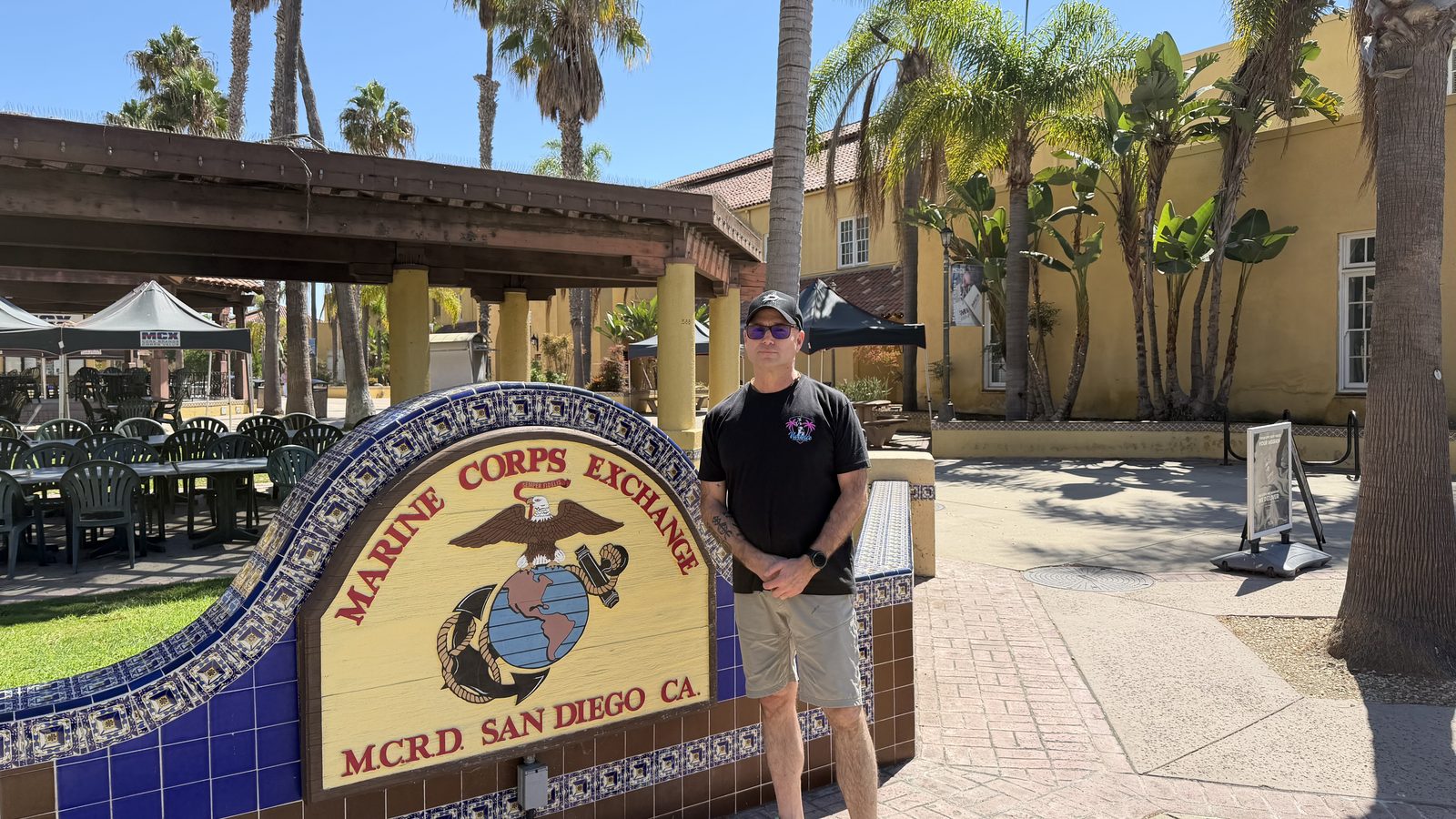
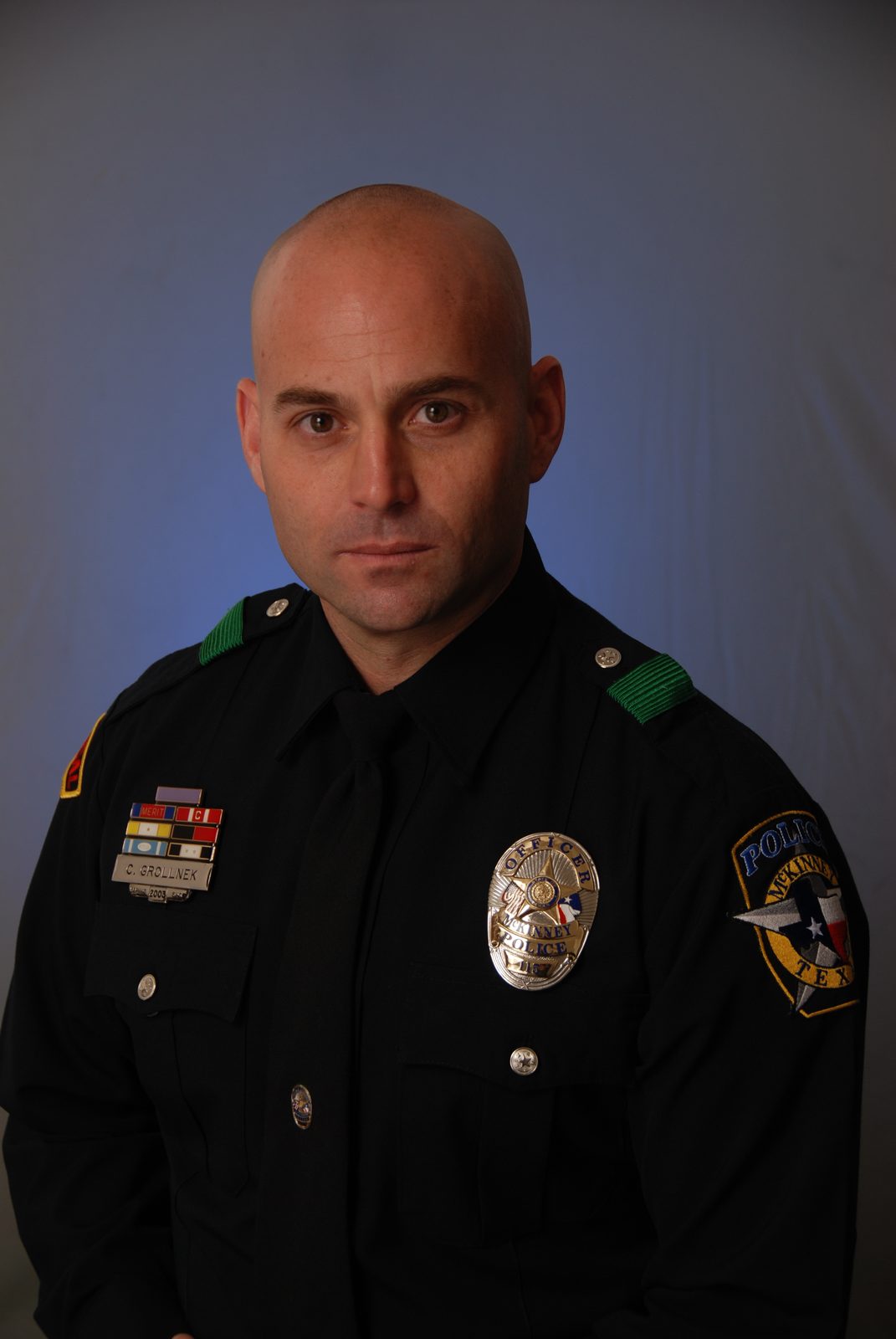
Active Shooter Incident at McKinney Police Department Chris Grollnek SWAT Action Report

The McKinney Active Shooter Incident: I Was Already Outside When It Started
On August 17, 2010, I was outside at the McKinney Police Department when an attack began there. Not dispatched to it. Not called in afterward. Already there, on scene, when the first rounds were fired, and there through the end of it.
That distinction sounds small. It is the entire difference.
Almost everyone who describes being “involved in an active shooter incident” means they responded to one. They were somewhere else, a call came out, and they drove toward it. That is real, and it is hard, and it is not the same thing. Arriving after an event has begun means you inherit someone else’s timeline. Being present as it begins means you watch the timeline get made.
What happened that morning
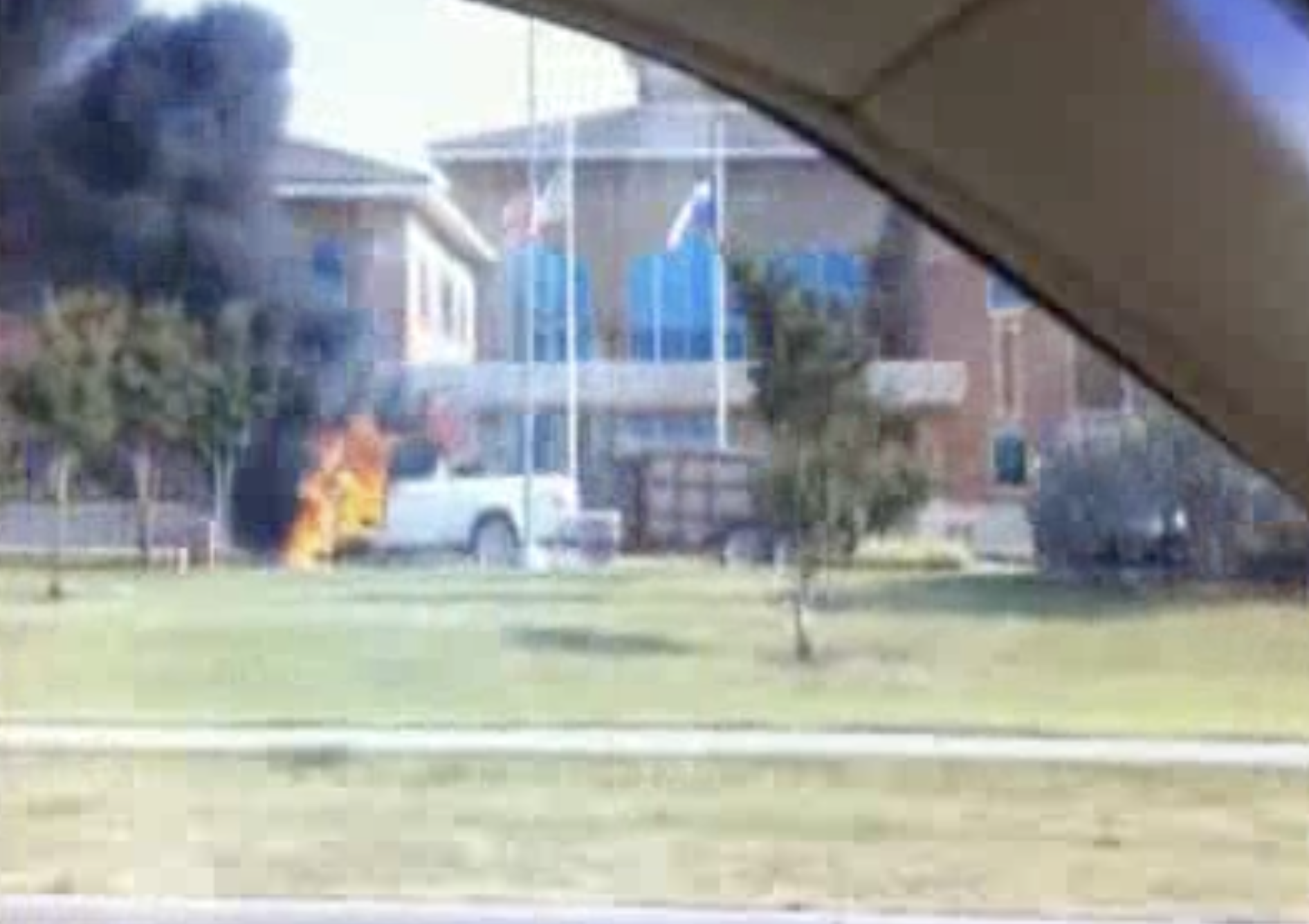
A man arrived at the police department with a vehicle-borne improvised explosive device, a trailer loaded with ammonium nitrate soaked in diesel fuel. Inside the truck were more than a thousand rounds of ammunition. He set the vehicle on fire, and flares inside caused that ammunition to cook off and discharge on its own.
He fired 168 rounds at responding officers.
He did not hit anyone. The reason is a phenomenon called optical offset: he had mounted a scope to a rifle and never zeroed the two together. He was looking directly at people through glass while the barrel was pointed well above them, sending every round into the roofline. He never knew. He believed he was aiming at officers, and the weapon was aimed at the sky.
That is the margin between that morning and a mass casualty event. Not tactics. Not response time. An unzeroed scope.
The incident ended when he took his own life.
The part that changed how I think
I had already spent years working active shooter cases and helping build response strategy. The premise underneath all of that work was speed: get there faster, close the distance sooner, shorten the gap between the first shot and the first officer through the door.
Standing outside that building, I understood something I had not let myself see. Every minute we shaved off the response was a minute spent inside an event that had already started. We were optimizing the aftermath. We had accepted the attack as fixed and were competing for the leftovers.
Prevention was the goal the whole time. It always had been. We simply had not been looking upstream, at the weeks and months before a person arrives in a parking lot with a plan.
Everything I have built since, the Active Shooter Prevention Project and the P.R.O. Model™, comes from that recognition. Prevention. Response. Options. In that order, because that is the order that saves people.
Why the combination is rare
There is a specific pairing that is unusual in this field: firsthand presence at an active shooter event from start to finish, combined with formal academic study of the phenomenon itself.
I earned a Master of Science in Administration of Justice and Security, graduating with a 4.0 and honors, and wrote my capstone on the active shooter phenomenon. By my own count, there are roughly five people in the United States who hold both the lived experience and the postgraduate academic work on this specific subject.
One of them is Dr. Michael Howell. He was off duty and shopping when an attack unfolded at a Costco in 2017, was present start to finish, and as a Kansas City police officer stopped the attacker. He completed his doctorate this year. I name him because he earned it, and because two of us is a more honest number than one. This is a small cohort, not a pedestal.
It is not a claim of being better than anyone. It is a description of how few people had reason to do both.
Experience without study produces war stories. Study without experience produces theory. The two together produce something a client can actually use: a model built from what happened, tested against what the research says, and refined in the field ever since.
What that has become
The work since has taken this into rooms I never expected. The P.R.O. Model™ is “A” DOJ-selected national standard for active shooter prevention and is in use at some installations and commands across the Department of Defense. I built the Program of Instruction for the Defense Nuclear Facilities Safety Board. I have briefed at the federal level, testified before Congress, and served as Active Shooter Prevention Coordinator for the NFL at Super Bowl LVIII and LIX.
Three registered saves have come out of this work, three real incidents where prevention doctrine has been credited with averting active shooter violence. Most are under non-disclosure, so the number stands without the story.
That is the number that matters. Not the credentials, not the standard, not the logos. Three families who never learned what almost happened to them.
The unit, on video
Two pieces of footage from the same period. Neither shows the incident. Both show the team.
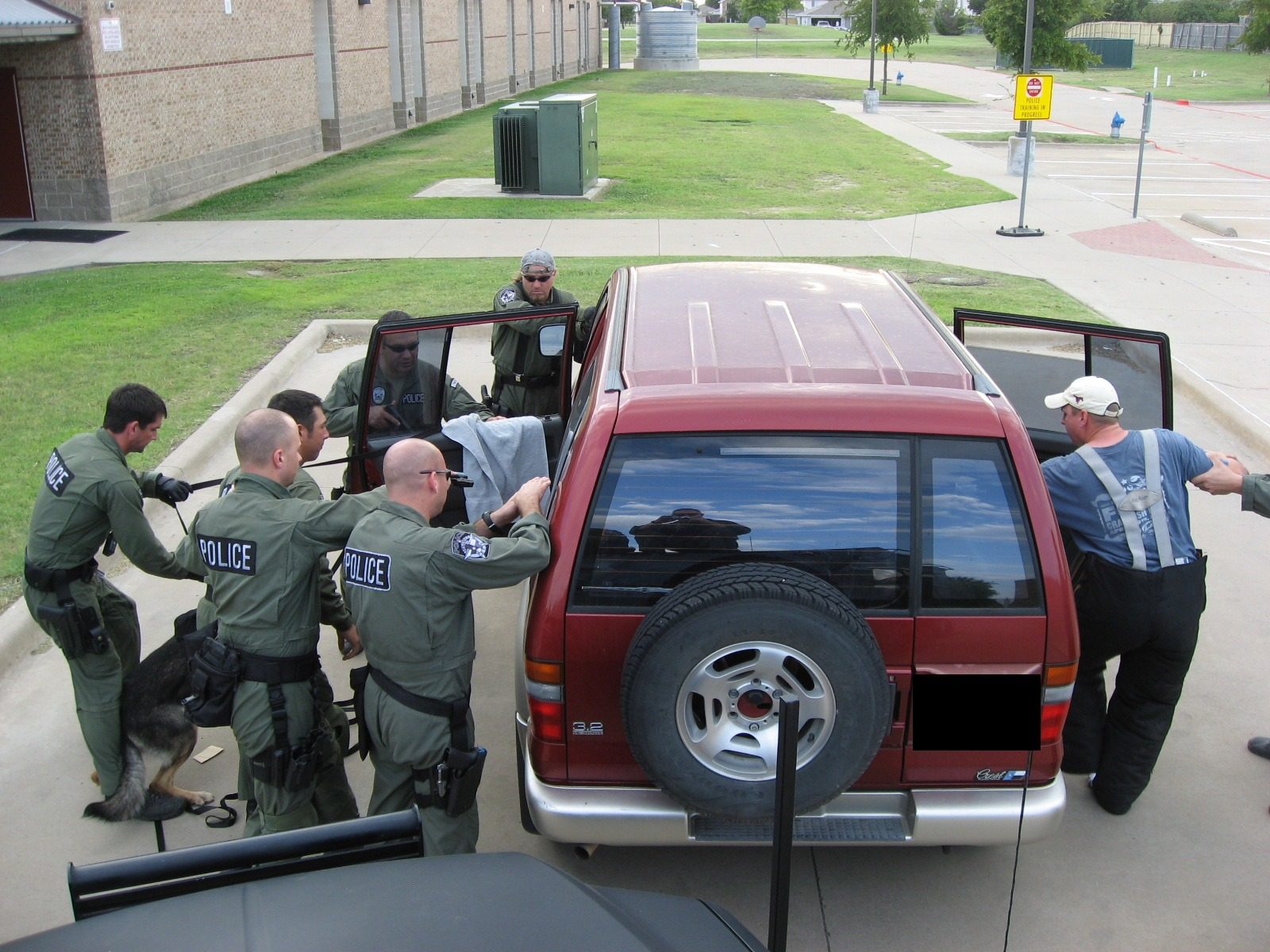
McKinney Police SWAT School, August 2010
Filmed the same month as the attack. Vehicle takedown drills on a simulated stop. Twenty three seconds of a class doing the repetitive, unglamorous work that decides what happens when it stops being a drill.
Texas SWAT, inside the McKinney unit
A longer look at the unit, recorded for broadcast and published in 2014.
Why I tell this story
Not because it is dramatic. Because it is instructive.
A man drove to a police station with a bomb and a rifle and more than a thousand rounds, and the thing that saved everyone was a mistake he made at a gun counter. That is not a security plan. That is luck, and luck is not a strategy anyone should build on.
The alternative is to move upstream, to the behavior, the grievance, the planning, and the moments when someone could still have been reached. That work is quieter, it never makes the news, and it is the only thing that actually prevents the day I watched.
Prepared, not scared. #NEVERHERE™ is the destination. The P.R.O. Model™ is how we get there.
Primary source: the SWAT after-action report from the follow-on operation
The report below is preserved exactly as written, with officer names redacted. To be clear about what it covers: this documents the follow-on SWAT operation, the search of the suspect’s residence in Anna, Texas after the incident at the department had concluded. It is not the record of the attack itself. It is included because primary sources matter more than recollection, and because the work does not end when the shooting stops.
 On 8-17-10 at approximately 0900 Officers X, X, X, X, X, X, and Grollnek were at the McKinney Police Departments outdoor range conducting a shotgun training course. Corporal X announced that there was an incident at the PD that was unfolding with a vehicle on fire and shots being fired. Cpl X and Cpl Grollnek advised all the parties of the incident unfolding and immediately began responding to the PD with Officers X and X. Upon arrival to the PD Cpl X, Ofc X, X, and X began holding perimeters’ until K9 Ofc X arrived and then immediately began searching for who everyone assumed would be a second active shooter. Cpl Grollnek arrived at the PD to begin a perimeter until asked to bring the T-Rex to remove possible pinned down victims. As the T-Rex was being mved conduct the request, Cpl Grollnek was advised that Swat would need to be ready for an alternate assignment.
At that time, the Team was advised that they were responding to the suspect’s residence in Ana, TX to conduct an exigent circumstance search of the residence. Once on scene, Cpl Grollnek set up on perimeter with Cpl X and waited for any additional suspects to come outside of the residence as the Swat Team Leader attempted to call out anyone that may be inside. After no one responded to the announcements on the loud speaker, Cpl Grollnek made his way to the front door and made entry as the point man to the residence as the front door was unlocked. K-9 Kilo was called up and began a preliminary search. After the K-9 was brought back outside with negative results, Cpl Grollnek began clearing the residence. After the all clear and secondary search was complete, Cpl X and Cpl Grollnek went to the perimeter again and search the outbuilding.
Once the search was completed the scene was turned over to C.I.D. to obtain a warrant and the Team responded back to the PD on stand-bye for the remainder of the day.
Share This Story, Choose Your Platform!
November 6, 2026

November 6, 2026
November 6, 2026