
Measuring Workplace Violence Prevention

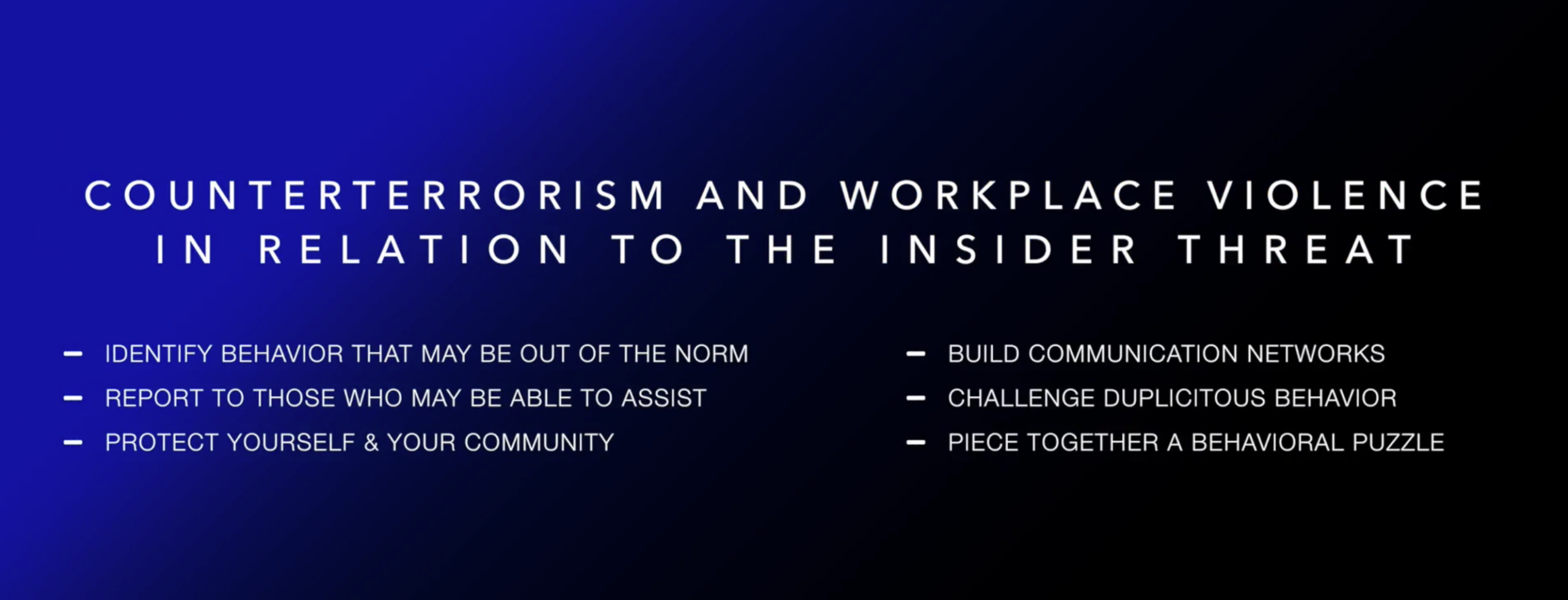
Frontline lessons on what we can finally count.
For most of my career, workplace violence prevention was a promise I could not fully prove. I am a former U.S. Marine and retired police detective corporal, and that is the frame I bring to every workplace I have walked into for the last three and a half decades. I have stood in factory bays, hospital corridors, corporate lobbies, distribution centers, campus student unions, and worship halls. I have listened to HR directors, general counsel, security leads, and the front-desk person who saw the pattern before anyone else did. Prevention has always been the right answer, and what has changed in 2026 is that I can finally measure it.
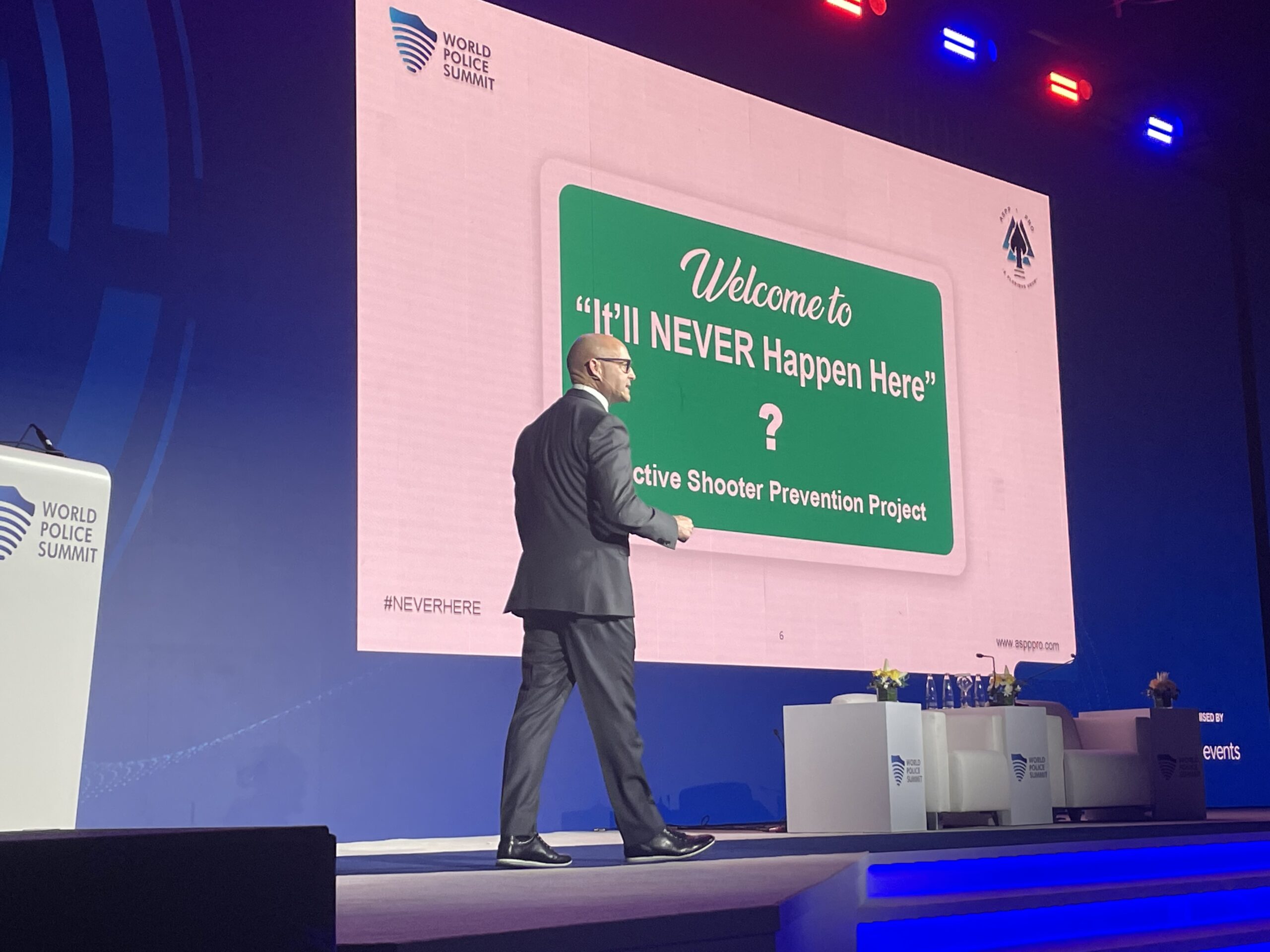
That change is not a marketing line. It is a shift in what my work looks like on a Tuesday afternoon. When I walk a building today, I do not just walk it; I walk it against a sensor grid, an indoor map, and a digital twin that shows me where the seams are before anyone tries to exploit them. The P.R.O. Model™ is A national standard the U.S. Department of Justice selected for active shooter prevention in the 2022 to 2025 cycle and again for the 2026 to 2030 cycle. That doctrine has not changed, and the instruments beneath it are new.
The Video That Says It in Ninety Seconds
If you want the fastest version of what I am about to write here, watch this clip first. The doctrine hasn’t changed, but the certainty behind it has.
What Workplace Violence Prevention Actually Meant, Until Now
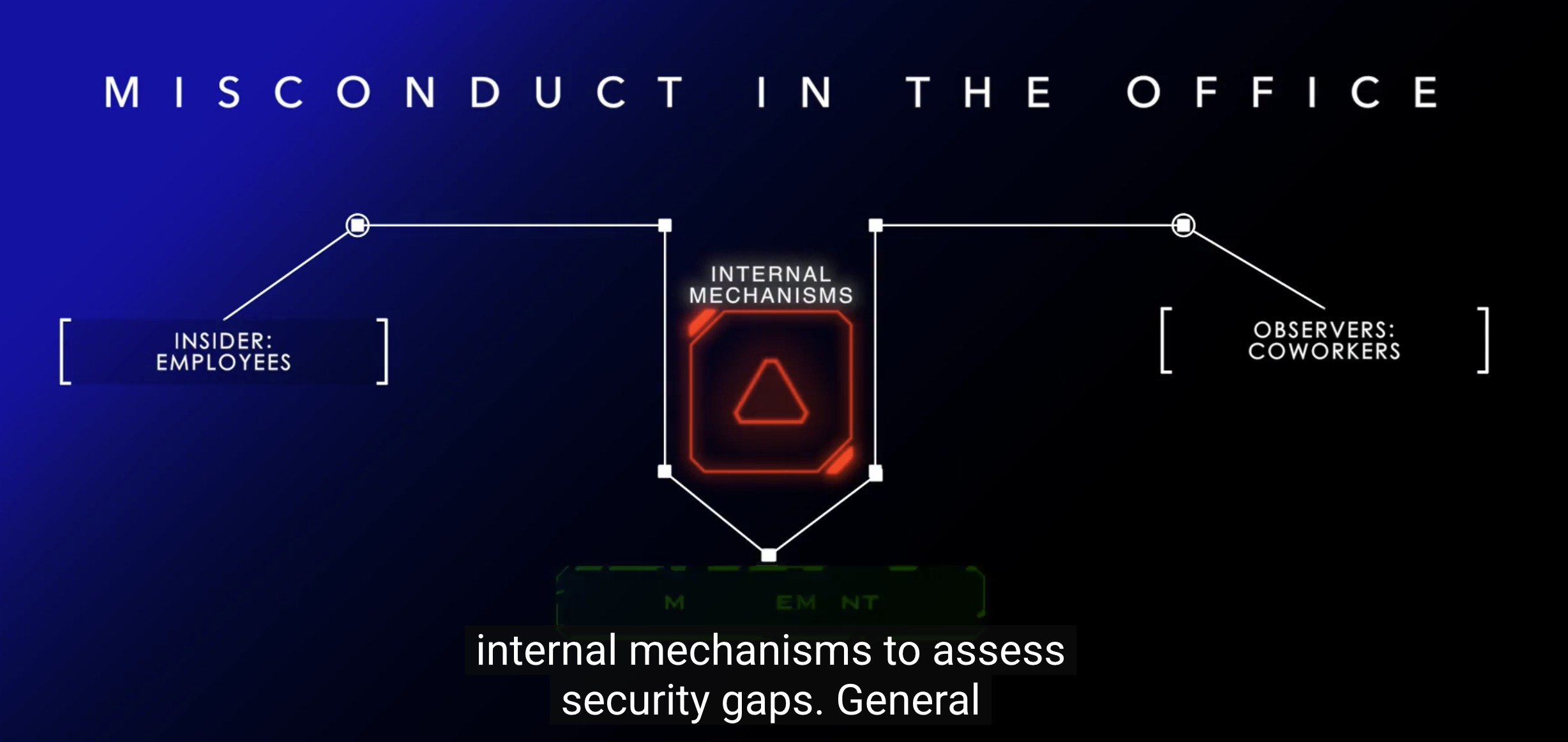
The internal mechanism between insider and observer, the space where measurable prevention lives. From Chris Grollnek’s Misconduct in the Office keynote framework.
Ask ten workplaces what workplace violence prevention means to them, and you get ten different answers. An annual training video, an anonymous tip line, a locked reception door, a poster in the breakroom. All of that is fine, but none of it is prevention in the way I mean the word.
Prevention is what happens in the days and weeks before the incident that never becomes an incident. It is a supervisor noticing a change in an employee, and a Behavioral Threat Assessment team getting the report while there is still time to intervene. It is a security integrator being able to say, with numbers and not feelings, that a particular corridor is now visible to the system that could not see it last month. It is HR knowing that the FBI-identified four-to-five pre-attack behavioral signals have a home to land in, not a hallway to die in.
For decades, my honest answer to the question “how do you know prevention is working?” was that we count the incidents that didn’t happen. The problem with counting things that didn’t happen is that they don’t leave receipts, and that is what changed.
For a federal take on the same insider-threat pattern before we pivot, watch this from the U.S. Department of Homeland Security.
The Five Wealthiest People on Earth Built Empires on Measurement
Look at the Forbes Real-Time Billionaires list this morning. The names shift week to week, and any given morning it might be Musk, Ellison, Page, Brin, or Bezos at the top of the list, but the underlying pattern does not shift. Elon Musk surpassed one trillion dollars in June 2026, becoming the first person in world history to do so. Larry Page is worth north of $293 billion. Sergey Brin holds around $269 billion. Jeff Bezos anchors the group near $249 billion. Combined, the top ten wealthiest people on earth are worth roughly $2.951 trillion.
Different industries, same discipline. Every one of them built an empire by measuring something the rest of the world was content to guess about. Musk measures rocket materials to the kilogram and reasons up from first principles; his line is to boil things down to their fundamental truths, then reason up from there. Bezos measures customer behavior in signals most companies throw away and warns his own board every year that Day 2 is stasis, followed by irrelevance, followed by decline. Page and Brin measured the whole internet, one link at a time, and ranked it on latency the human eye barely registers. Ellison measured every enterprise database read and write in America.
If a warehouse can be measured to the second and a rocket engine to the millisecond, then a corporate campus, a hospital wing, a distribution hub, and a school cafeteria can be measured too. There is no technical excuse left. The measurement discipline exists, and what has been missing is the will to apply it to human life.
This Is About Time, Not Wealth
I am not going to write a post about the wealthy list. I am going to use it as a mirror. That mirror says we know how to focus this much discipline on something when we decide it matters, so let us decide.
Bill Gates put it in one sentence I have quoted for years. In his 2013 annual letter, the one titled Why Measurement Matters, he wrote: “I have been struck again and again by how important measurement is to improving the human condition.” He measured child mortality in nations most Americans could not find on a map, he measured vaccine coverage, and he hit targets and moved lives.
I am going to extend that sentence. Measurement is now critical to making progress in human safety. Prevention is measurable, and the difference between prevention and response, between a workplace where someone gets to leave at 5 p.m. and one where grieving families never leave, is measured in a currency none of us can print.
You can print money. You cannot print time. The empires on that Forbes list learned to buy time in every form, from cycle time and delivery time to launch time and latency, and I am asking us to buy time for people.
Prevention, Reasoned From First Principles
If I strip workplace violence prevention down to its bones and reason up the way Musk taught the world to reason, it comes out to an equation, not a slogan and not a memo.
Prevention = Time × Visibility × Decision Authority.
Time is what environmental measurement buys back through sensor grids, indoor mapping, digital twins that see the building the way a pilot sees weather, and edge nodes that flag the deviation before a human eye would.
Visibility is what computer vision and behavioral analytics deliver, surfacing the pre-attack signal in the moment a trained human would catch it if a trained human were everywhere at once.
Decision authority is what doctrine delivers, and the P.R.O. Model™ tells the human at the console what to do the second the signal fires: Prevention first, because that is where the outcome is actually decided; Response next, because trained people do what trained people do; and Options last, because the protective measures buy time when seconds count.
Multiply those three. Any one of them at zero and prevention collapses; all three above zero and the equation compounds, which is exactly what the wealthy on that list understand about compounding, and exactly what we should apply here.
The Gift of Time, Five Years of Evolution
For five years I have delivered a keynote called The Gift of Time. Every year the same audience hears something new, because every year there is more we can measure. Indoor mapping, drones, edge sensors, behavioral analytics, digital twins: each one integrates into the P.R.O. Model™ and adds seconds, sometimes minutes, sometimes the minutes that made all the difference.
The keynote has resonated with audiences from Fortune 100 boards to school superintendent conferences to houses of worship because it does not sell dread. Dread paralyzes, but measurement acts, and I would rather my audience walk out prepared than walk out scared. Every year, the material lets me deliver more preparation and less fear.
Applied to workplace violence prevention, that keynote answers the executive’s real question, the one that never gets asked out loud: if I invest here, what am I actually buying? The answer today is not “peace of mind”; the answer is minutes, and in this work, minutes are lives.
What a Leading Workplace Violence Prevention Expert Should Look Like in 2026
If you are the person tasked with choosing an outside voice on workplace violence prevention this year, here is what I would look for, not because it describes me, but because these are the criteria that will actually protect your people. Ask any expert you are considering to show you the following.
- Ask for doctrine, not decks. Is there an underlying doctrine the expert authored or actively shapes? The P.R.O. Model™ is A national standard the DOJ selected twice, and I keep it evolving as the technology stack matures. A slide deck is not doctrine.
- Ask for measurement, not vibes. Ask what they measure and how they measure it. If the answer is “we ask the client how they feel,” keep looking. If the answer includes sensor coverage percentage, mean time to detection, floor-plan coverage against a digital twin, behavioral-signal triage times, and post-event coverage delta, that is a measurable practice.
- Test whether response is treated as one layer, not the whole story. Run·Hide·Fight, Avoid·Deny·Defend, ALICE, CRASE, and ALIVE are all response doctrines, and each one starts after the threat is in motion. If the only vocabulary an expert brings is response, you are buying a partial solution. Prevention is a different discipline that runs before response ever has to.
- Confirm they operate through a community, not as a lone hero. The people worth listening to have a bench. My Community of Experts is 800+ years of combined experience across 140 partnerships, 28 strategic partners, and 21 states plus four countries. No one person carries this problem, and anyone who claims to should worry you.
- Verify federal-grade rigor. Look for evidence of past performance at the level where the standard is written. P.R.O. Model™ in use at some installations and commands across the Department of Defense, DNFSB curriculum, NFL Active Shooter Prevention Coordinator at Super Bowls LVIII and LIX, and facility assessments across NBA and NHL venues. When the highest-consequence buyers trust the work, the doctrine has been pressure-tested.
This is not a checklist to intimidate; it is a checklist to save you from spending real money on a poster. If your expert cannot show you doctrine, measurement, prevention-first, community, and past performance at scale, keep interviewing.
A Word for the HR Director Reading This at 4 P.M. on a Friday
You are the person carrying most of the weight. You know it, your CEO knows it, and your general counsel knows it. Workplace violence prevention lives on your desk because everyone else is one step removed from the humans who work in the building.
Here is what I want you to take from this piece and take home tonight. First, prevention is measurable now, and the industry has caught up to the mission for the first time in my career, and I would not say that lightly. Second, you do not have to build the measurement stack alone; that is what a Community of Experts is for. Third, the tone you set matters. Prepared, not scared. The people you lead read your face more than they read your policies.
The reason I use the phrase #NEVERHERE™™, with the trademark, in all caps, as a destination, is that it names the outcome without naming a fear. It says “not this building, not this campus, not this hospital wing, not this loading dock, not on our watch.” It is a north star, not a threat, and that is the kind of language that pulls a workforce forward.
The Ask
The ask is not a check; the ask is attention. Attention becomes measurement, measurement becomes minutes, and minutes become lives. That is the compounding curve that matters to me, and the one I believe matters to any leader reading this whose real job title, on the days it counts, is “make sure everyone gets home.”
Evil does not discriminate, and neither do I. Every worker, every patient, every student, every worshiper, every fan deserves the same measurement discipline the wealthiest in the world learned to apply to their supply chains, and redirected at people, that discipline is what buys time for the rest of society.
We can finally measure prevention, workplace violence prevention included, so let us.
Next action: If you lead an HR function, a security program, a campus, a hospital system, or a workplace of any size, request a P.R.O. Model™ posture assessment at chrisgrollnek.com. One session, real numbers, destination: #NEVERHERE™™.
Measurement and legal duty run together. Sarbanes-Oxley and OSHA sets out what regulators and courts now expect an organization to have already done. The statute behind that is Section 5 of the Occupational Safety and Health Act, the General Duty Clause, which requires an employer to furnish a workplace free from recognized hazards. The two national sources I measure against are public as well. The Bureau of Labor Statistics counts fatal work injuries every year through its Census of Fatal Occupational Injuries, and the Secret Service National Threat Assessment Center publishes the behavioral research that tells me what to look for before an incident rather than after it.
Share This Story, Choose Your Platform!
November 6, 2026
November 6, 2026
November 6, 2026
November 6, 2026