Active Shooter Prevention Lessons

Active Shooter Prevention Lessons
Lessons from the Frontline
By Chris Grollnek, M.S., Former U.S. Marine and retired police detective corporal. Chairman of the Board & Founding Principal, Active Shooter Prevention Project™ (ASPP™™). Published .
Ready to build a real prevention program? Talk with me directly about active shooter prevention training and assessments for your organization.
Active shooter prevention lessons come from work done long before a threat ever arrives, and the ones worth writing down are the ones you can only learn by living inside the problem for years. I have been inside this problem for thirty-five years, and this piece is what I want you to walk away with when you close the tab.
The Fourth of July and What Freedom Actually Costs
I’m writing this on the Fourth of July and the timing matters, because every parade, every fireworks show, every ballgame and cookout on somebody’s back lawn is exactly the kind of public gathering an attacker looks for, and the reason your neighborhood will get through the weekend without an incident is that somebody, somewhere, did the work weeks and months before the first flag ever went up… prevention is not what you do the day of the event, it is everything you did in the ninety days before.
The frontline is not the shooter’s crosshairs; it is the space between now and the next event and everything we choose to do inside it, and I have been on that frontline since I stepped off the bus at Marine Corps Recruit Depot in 1991 and pinned on a badge as a police officer in 1996. I’ve been building doctrine around it since I founded the Active Shooter Prevention Project™ in 2010, the same year I responded directly to the McKinney, Texas, active shooter incident and turned what I saw into the earliest work that would become the P.R.O. Model™.
Thirty-five years of that work have taught me lessons I only could have learned one way, and what follows are the ones I carry into every training, every keynote, every case, and every conversation with a school board or a Fortune 500 board.
Lesson One: Prevention Beats Response Every Single Time
The math is why prevention has to lead. The FBI recorded 528 active shooter incidents in the United States between 2000 and 2024 with more than 1,250 people killed and thousands wounded, and while every one of those numbers is a person we mourn, the number that changes what a leader does next is the gap between when the threat begins and when help arrives, because police reach the scene in an average of 12 to 15 minutes and the average incident ends inside 8 minutes with many ending inside 4. Response cannot close a gap it was never designed to close, and that is why the last twenty years of response-only planning have not moved the numbers in the direction anyone hoped they would.
Prevention closes that gap by working before the clock ever starts, and it is the layer that identifies warning signs weeks or months in advance, coordinates the people who can intervene, hardens the environment where the intervention will happen and trains the community around the target to recognize what they are seeing… when prevention works, nothing happens, and when prevention narrows the window, response finally has a fighting chance.
Key fact: Police arrival averages 12 to 15 minutes, and most active shooter incidents end inside 8 minutes. Prevention is not a preference; it is math.
That is the order the P.R.O. Model™ was built on, and the reason the U.S. Department of Justice selected it as an “A” National Standard for the 2022–2025 window and again for the 2026–2030 window, the only organization ever chosen in both.
Lesson Two: The Warning Signs Are Almost Always There
Every case I have ever worked, studied, or trained others on tells the same story, and it is that somebody always saw something before the trigger was pulled. A former coworker noticed a change in tone, a teacher watched a student’s behavior shift, a family member sat with worry they didn’t know how to name, or a stranger scrolled past posts on social media that felt off but didn’t know who to report them to; the signal, in every case, was there before the moment arrived, and what broke down was almost never the presence of the information, it was what happened next.
Do the people in your organization know what they saw when they see it, do they know who to tell, does the person they tell take it seriously and route it correctly, and is there a threat assessment team with real authority to act on the other end of the routing? That is what behavioral threat assessment training is for, and it is the discipline that separates a community that catches these signals from a community that reads about them afterward. In my experience, prevention is not a single moment of insight; it is a chain of small, disciplined decisions made by people trained to make them, and every link in that chain is a person who was ready when the moment arrived.
For any leader reading this, the question is simple: if a warning sign arrived in your organization tomorrow morning, do you have a team that knows what to do with it? If the answer is anything other than a clear yes with a name attached, that is the first thing to fix.
Lesson Three: Training Has to Be Continuous, Not a Checkbox
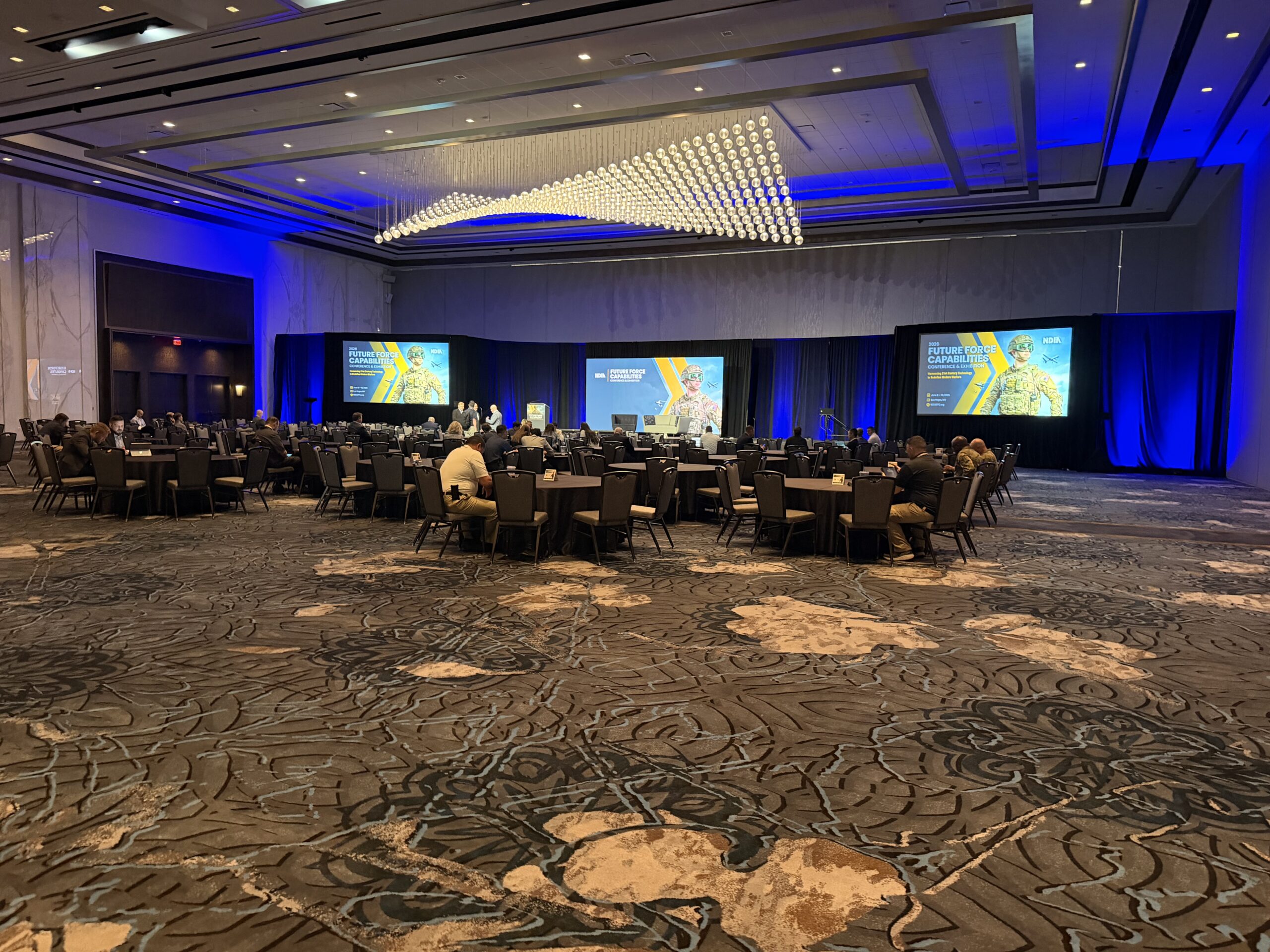
Prevention doctrine that ends up on the DOJ national standard is built in rooms like this one. NDIA Future Force Capabilities Conference, Caesars Forum, June 2026.
Training that happens once a year to fulfill a compliance requirement does not work, and I have watched it fail in real time, because when the human nervous system is under stress, it defaults to what it has practiced most recently, not what somebody briefed eleven months ago. React, Escape, Survive is the methodology I teach because three words are what people can remember when their body is running the show, and the three do exactly what the words say: React first and do something instead of freezing, Escape second and put distance and cover between yourself and the threat, and Survive third with everything that keeps you alive until help gets there.
Around that methodology, real active shooter prevention training programs run drills and tabletops and refresher training on a rhythm the organization can actually sustain, and the executives get one version of it, the teachers get another, the front-line staff and contractors and temporary hires get the version that fits what they will actually face; the organizations that stay ahead of this treat active shooter training the way they treat fire alarms and CPR, as life-safety infrastructure that runs continuously and never quite finishes.
If your last active shooter training was more than six months ago, it is time, and it does not have to start from scratch, because assessments, drills, and preparedness training layer onto what you already have and refresh on a cadence your business can carry.
Lesson Four: The Community of Experts Is Not Optional
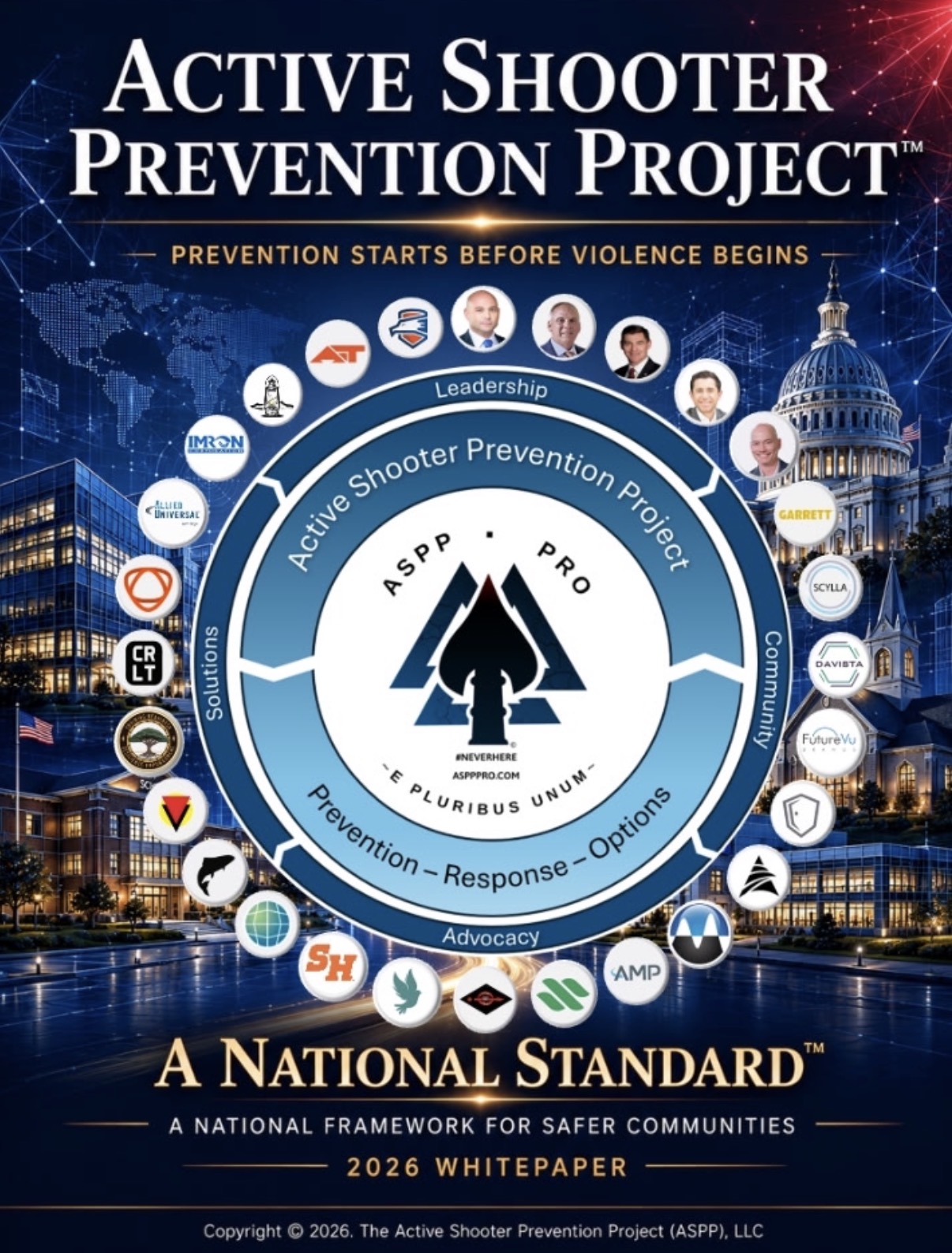
No expert works alone. Layered, all-hazard prevention is what the Community produces, 800 years of combined experience, 140 partnerships, one standard.
No single expert or company or technology solves this, because the problem is too complex for any one hand to hold, and anyone selling it as if it were is either brand new to the field or telling you a story you should not believe. That is the reason ASPP™ is built on a Community of Experts with more than 800 years of combined experience, 140 partnerships and 28 strategic partners across a footprint that reaches 21 states and four countries in the United States, Canada, Mexico and Poland, and every partner in that Community owns one layer of the problem, whether that is detection and screening, access control, structural hardening, notification and visualization, gunshot detection, training and human doctrine, intelligence and government affairs, nonprofit hotlines and advocacy, strategic partnerships and contract vehicles, or academic research.
Layered, all-hazard prevention is what the Community produces, and it is what separates the P.R.O. Model™ from every single-vendor answer on the market, because a serious prevention program needs a network of specialists working together, not a product wrapped in a promise. When I work with an organization, my first move is never to sell a service; it is to figure out which layers of the Community that organization needs today, next quarter, and next year, and then to build the plan around that.
Lesson Five: The P.R.O. Model™ Meets Every Environment
The same standard that protects a Fortune 1 campus protects a ten-person nonprofit, and what changes across those two organizations is scope; what does not change is the seriousness of the protection. I have seen the P.R.O. Model™ applied at the NFL’s Super Bowl LVIII and LIX where I served as the Active Shooter Prevention Coordinator, at Madison Square Garden across the NBA and NHL where I ran an active shooter assessment of one of the busiest venues in the world, and in advisory work on FIFA World Cup 2026 preparations, and I have seen it applied in K-12 districts and higher education, in houses of worship, healthcare systems, critical infrastructure sites and small businesses that were the sole employer in their town.
Every reader of this piece is protecting somebody, whether that is a family, a team, a congregation or a customer base, and the P.R.O. Model™ was built so whoever you are protecting, you have a repeatable standard to lean on.
The Documented Saves That Prove This Works
Prevention is hard to prove because when it works, nothing happens, and there is no headline for the shooting that did not occur, but there are documented saves, and they matter. ASPP™ has three registered prevention saves cleared for public reference, moments when the system worked and lives were spared, and I have testified as an active shooter expert witness in multiple cases on behalf of victims’ families, translating what I have seen on the front lines into court-admissible expert opinion.
The saves are not the point on their own; the point is that they exist, and they exist because prevention was in place before the trigger was pulled, and every one of them is why the work continues.
Two Employees or Fortune One: The Standard Scales
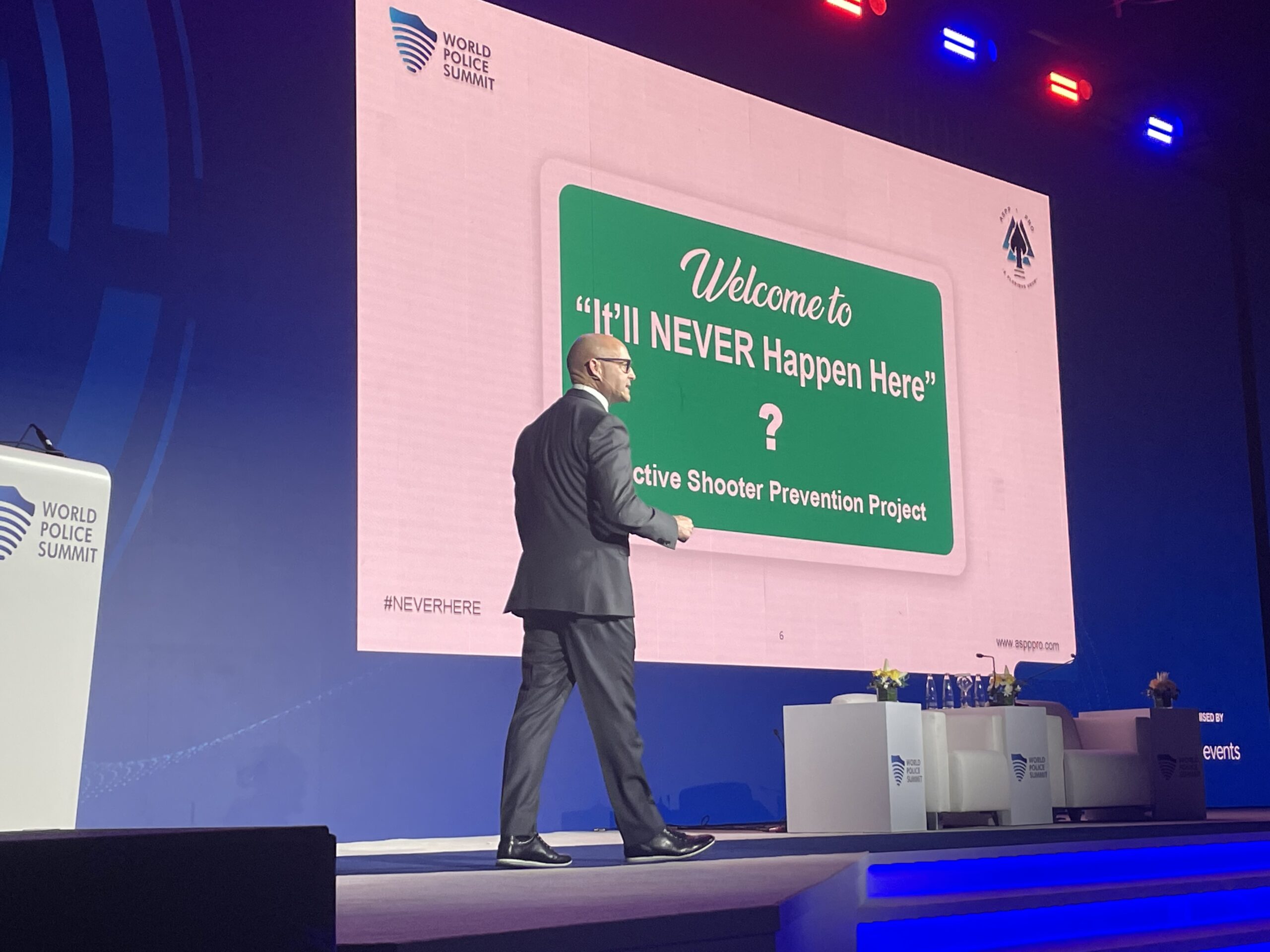
The last two decades of my career have taken me from small-town assessments to briefings across three presidential administrations, from local police roll calls to more than 1,200 combined television appearances and speaking engagements, and from a keynote at the 2023 Dubai World Police Summit that I attended at the personal invitation of His Highness Sheikh Mohammed bin Rashid Al Maktoum to advisory work with the Department of Defense, the U.S. Army, the U.S. Marine Corps, the U.S. Secret Service, the U.S. Department of Justice, the White House, the Missile Defense Agency and fourteen of the Fortune 100.
That breadth matters because prevention has to work at every scale, and the two-employee shop deserves the same standard as the largest employer in the country, the same way the rural school district deserves the same standard as the metropolitan one; the scope changes and the standard does not, and every organization has a right to the same protection.
The scale rule: If you are a two-person business you are not too small to prevent this, and if you are a Fortune 1 you are not too complex to apply the standard cleanly. That is what a national standard means.
Government, critical infrastructure, K, 12 and higher education, houses of worship, healthcare, nonprofits, corporate and commercial, events and public gatherings- every one of these environments has been touched by targeted violence at some point, and every one of them can be protected by the same standard applied to fit its scope.
How to Choose the Right Prevention Partner
This is the piece I would want if I were on the buying side. Look for real first-hand experience and not a resume of theory, because time on the ground shows up in how a program survives contact with a real organization, and look for training in doctrine as well as tactics because the difference between the two is what keeps a program running after the trainer goes home. Look for credentials that hold up under scrutiny, and look for federal validation, because my recognition by the U.S. Department of Justice, twice, is the highest bar in this field and there is a reason it is rare.
Ask what happens after the training ends, ask what community the expert belongs to and what layers of that community they can bring to bear on your problem, and ask about the outcomes they have produced and then check them, because the right choice is the reason the incident never happens and the wrong one costs more than the right one ever will.
Prevention work is built on trust, and trust is built on a long record of doing the work the right way when nobody was watching.
Frequently Asked Questions
What does prevention work in active shooter response actually look like day-to-day?
On any given day, it looks like active shooter prevention training programs, doctrine development, on-site assessments, expert witness work in court, keynote speaking, board advisory work, and building the Community of Experts that anchors the P.R.O. Model™, and the common thread is that all of it happens before the moment a threat arrives, not after.
How long does it take to build a real prevention program?
A functional prevention program can stand up in weeks, and a mature one takes six to twelve months, and even then it never truly finishes, because life-safety programs run on a continuous rhythm the way fire and CPR training does, and that is what keeps them working when they are needed.
Is the P.R.O. Model™ only for large organizations?
No, and that is exactly the point. The P.R.O. Model™ was built so the same standard protects a two-person business, a Fortune 1 enterprise, a school district, a house of worship, a hospital and every organization in between, and what changes across those organizations is scope, not the standard itself.
What makes the DOJ recognition different from other credentials?
The U.S. Department of Justice selected the P.R.O. Model™ as an “A” National Standard for active shooter prevention training twice, in the 2022–2025 and 2026–2030 windows, and it is the only organization selected in both, and that is federal validation, not a self-awarded credential.
What Comes Next
The Fourth of July will pass, and so will the next holiday and the one after that, and what will matter is what is in place before each of them. If you lead an organization at any scale, you have decisions to make about whether prevention is a program or a checkbox, whether your active shooter training runs continuously or only once a year, whether a Community of Experts stands behind you or a single vendor sold you a single answer, and whether you are a step closer to Destination #NEVERHERE™™ than you were last year or not.
Prevention is a science, and it is time we treat it like one, and that is the work.
…the best emergency is the one that never happens…
…every organization that builds prevention into its foundation is a step closer to Destination #NEVERHERE™™…
That is the frontline and the standard, and it is the work I have been protecting for thirty-five years.
Sources referenced in this piece:
FBI Active Shooter Incidents in the United States, 2000–2024. fbi.gov
U.S. Department of Justice, Executive Office for United States Attorneys, P.R.O. Model™ recognition, 2022–2025 and 2026–2030 windows.
Active Shooter Prevention Project™ (ASPP™), 140 partnerships, 28 strategic partners, 800+ years combined experience across a Community of Experts reaching 21 states and four countries. aspppro.com
Chris Grollnek, M.S., Active Shooter Prevention Expert.
Former U.S. Marine and retired police detective corporal. Chairman of the Board & Founding Principal of the Active Shooter Prevention Project™ (ASPP™), architect of the P.R.O. Model™ recognized as “A” National Standard by the U.S. Department of Justice twice, in the 2022–2025 and 2026–2030 windows, the only organization selected in both. 35 years of cumulative frontline experience across military service, law enforcement, and active shooter prevention, with 1,200+ combined television appearances and speaking engagements.
Share This Story, Choose Your Platform!
November 6, 2026
November 6, 2026
November 6, 2026
November 6, 2026