Active Shooter Expert Witness: The Bench Behind the Testimony

Active Shooter Expert Witness
By Chris Grollnek, M.S. | July 2, 2026
Need an active shooter expert witness for your case? Contact us directly to discuss how I can help.
An active shooter expert witness is a qualified professional who provides testimony, case analysis, and expert opinions in litigation involving active shooter incidents, negligent security, and premises liability.
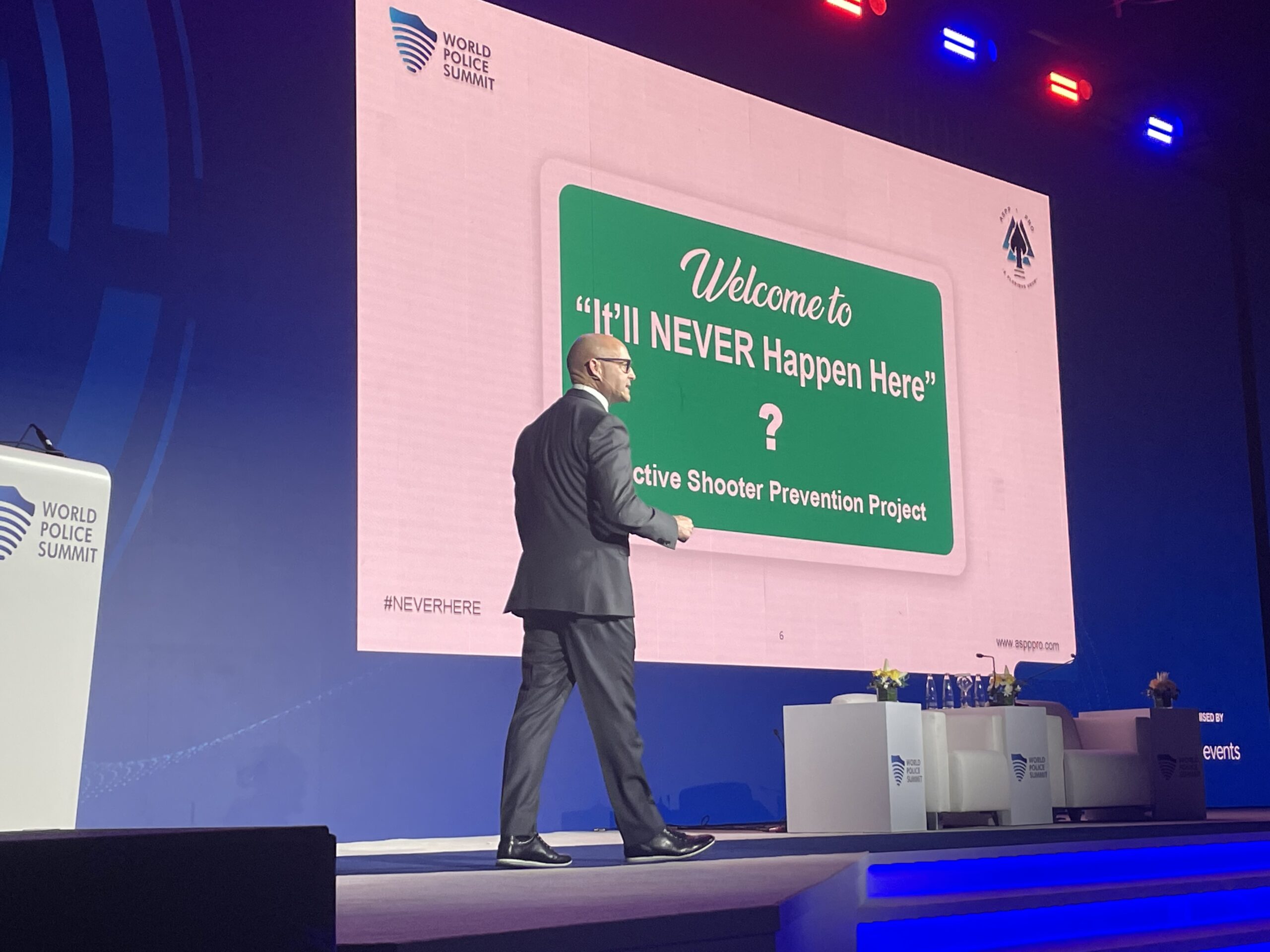
I have spent more than 34 years studying, preventing, and responding to active shooter events. The U.S. Army, in its own account of the Blue Grass Army Depot demonstration, called me “one of the country’s foremost authorities on active shooters” (army.mil, 8 October 2024); I quote it because it is theirs to say, not mine. In that time, I have worked with law enforcement agencies, Fortune 500 companies, schools, houses of worship, and healthcare systems across the country. Today, a growing part of my work happens in courtrooms and law offices, where I serve as an active shooter expert witness for attorneys, insurance carriers, and organizations that need clear, credible, prevention-focused analysis.
When I take on a case, I bring more than my own experience; I draw on a Community of Experts spanning eight specialized disciplines with 800+ years of combined expertise. This post explains what that role looks like, why it matters, and why retaining me means accessing an entire prevention ecosystem.
What Does an Active Shooter Expert Witness Do?
An active shooter expert witness bridges operational reality and the legal process. Attorneys retain me when a case involves an active shooter incident, a near-miss, or a credible threat that led to harm. The work spans several core functions:
- Case review and analysis, examining incident reports, security protocols, training records, surveillance footage, and threat assessment documentation
- Standard-of-care analysis, evaluating whether the organization met recognized standards for active shooter prevention and preparedness
- Expert report writing, producing detailed written opinions with findings, methodology, and conclusions
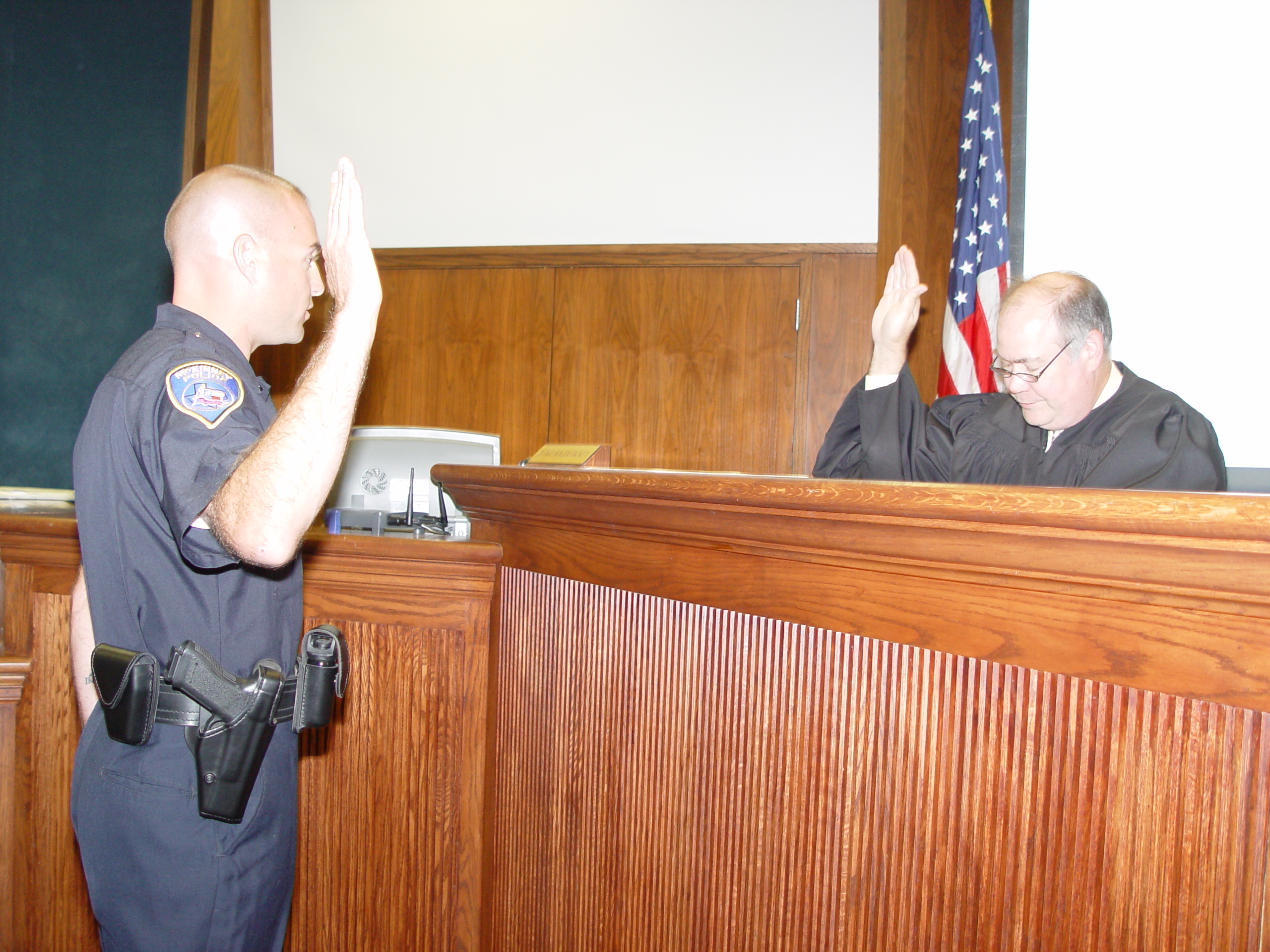
- Deposition and trial testimony, answering questions under oath and presenting findings to judges and juries in clear, accessible language
I work on behalf of both plaintiffs and defendants. My commitment is to the truth of the analysis, not to a predetermined outcome. When an organization had a strong prevention program and followed it, I say so. When warning signs were missed or ignored, I say that too.
Why Active Shooter Litigation Demands Prevention Expertise
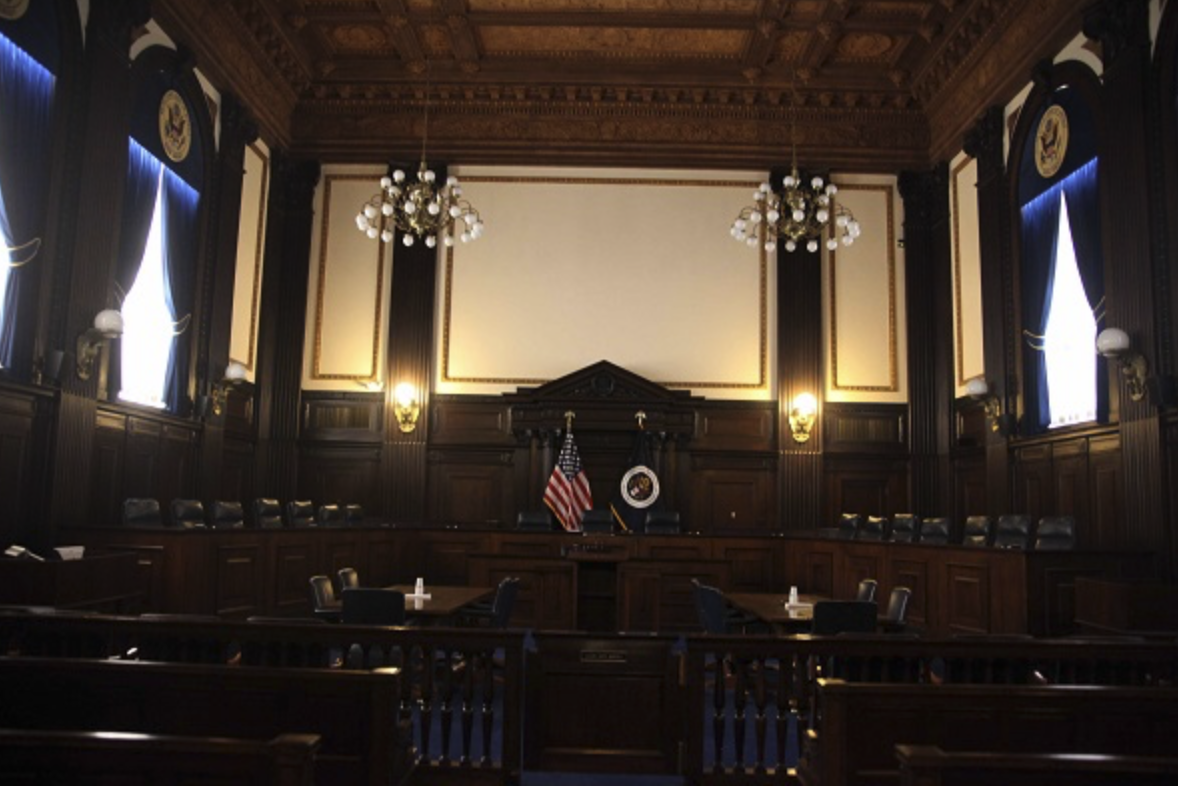
Active shooter litigation increasingly plays out in courthouses across the country.
The legal landscape around active shooter incidents has shifted significantly in the last decade. Negligent security and premises liability lawsuits are no longer rare; they are an established and growing area of litigation. The question in court is increasingly direct: What did the organization do before the attack to prevent it?
The numbers tell the story. The FBI’s 2024 Active Shooter Report recorded 24 incidents in 2024, a 50% decrease from 48 in 2023. That single-year decline is encouraging, but the broader trend demands attention: from 2020 through 2024, the FBI documented 223 active shooter incidents, a 70% increase over the 131 incidents from 2015 through 2019. The threat is not receding. It is evolving.
Key stat: 223 active shooter incidents from , a 70% increase over the prior five-year period (FBI, 2024).
The legal consequences are equally significant. The more than $750 million settlement following the Las Vegas shooting at the Mandalay Bay set a precedent that reverberates through every industry. Failing to prepare carries enormous financial and reputational liability.
As SHRM has reported, employees, customers, and students now expect organizations to have active shooter prevention programs, not just emergency response plans. When those expectations are unmet and tragedy strikes, litigation follows. And in that litigation, the court needs experts who understand prevention, not just response.
What I Bring to the Courtroom
My background is not theoretical. I am a former U.S. Marine and retired police detective corporal with more than three decades of hands-on experience in active shooter prevention, response, and investigation. I hold a Master’s degree with a capstone on the active shooter phenomenon. Here is what that translates to in a courtroom:
- 34+ years studying and preventing active shooter incidents
- Creator of the P.R.O. Model™ (Prevention. Response. Options.), an “A” National Standard selected by the U.S. Department of Justice, twice: 2022–2025 and 2026–2030
- Testified in multiple cases on behalf of victims’ families in active shooter and negligent security litigation
- 700+ site assessments across corporate, educational, healthcare, government, and faith-based environments
- Network news contributor on CNN, Fox News, and MSNBC, providing expert analysis on active shooter incidents and prevention
- Published author on active shooter prevention, workplace violence, and organizational security
- Founder of the Active Shooter Prevention Project™ (ASPP™) and the Community of Experts
When I take the stand, I bring the credibility of someone who has done the work. I have walked the hallways, assessed the vulnerabilities, trained the staff, and studied the attackers. That operational depth gives my testimony weight that purely academic credentials cannot match.
The Bench Behind the Testimony
Active shooter cases rarely hinge on a single discipline. Detection systems, access control, behavioral warning signs, communication failures, physical hardening gaps, training deficiencies: the facts of a case can span every layer of organizational security.
That is why I built the Community of Experts within the Active Shooter Prevention Project: a bench of professionals across eight specialized disciplines, each a recognized authority in their field, who collectively represent more than 800 years of combined expertise. When I serve as an expert witness, I draw on this community to ensure the analysis reflects true depth in every relevant layer.
The eight discipline layers
The eight discipline layers, organized around the ASPP™ Wheel, include:
- Detection and Screening, specialists in metal detectors, AI-powered weapons detection, and entry-point screening technologies
- Access Control, experts in physical access systems, facial authentication, and perimeter management
- Situational Awareness and AI, professionals focused on real-time threat detection, video analytics, and AI-driven surveillance
- Communication and Mass Notification, specialists in emergency alerting platforms, two-way communication systems, and notification protocols
- Physical Security and Hardening, experts in ballistic barriers, safe rooms, architectural hardening, and facility design for survivability
- Training and Education, professionals who design and deliver drills, tabletop exercises, and staff preparedness programs
- Behavioral Threat Assessment, specialists in warning sign identification, intervention strategies, and anonymous reporting systems
- Indoor Mapping and Digital Twin, experts in persistent interior mapping, sensor integration, and spatial intelligence for emergency response
What this means for your case: when you retain me as your active shooter expert witness, you are not getting one person’s opinion. You are accessing an entire prevention ecosystem, with discipline-specific professionals who can inform and strengthen the analysis behind my testimony.
This structure is deliberate. The white paper “Reimagining Safety: Charting the Path to Active Shooter Prevention, Preparedness, and Response” lays out the P.R.O. Model™ framework across all eight layers, and a companion insurance risk-reduction white paper shows how the model earns insurance credit through measurable risk reduction. Both documents inform my standard-of-care analysis and are supported by the Community’s discipline-specific expertise.
The Standard of Care: Prevention Before Response
In negligent security litigation, the central question is whether the defendant met the standard of care. Did the organization do what a reasonable, similarly situated entity should have done to protect the people on its premises? For active shooter cases, that question now extends well beyond locks, cameras, and response drills.
The P.R.O. Model™ provides a measurable, defensible framework for establishing that standard. Detailed in the white paper “Reimagining Safety” and backed by discipline-specific experts across all eight layers, the model prioritizes three pillars:
- Prevention, Identify, assess, and manage threats before violence occurs. This includes behavioral threat assessment, anonymous reporting systems, intervention protocols, and a culture that encourages speaking up.
- Response, Ensure that if prevention fails, the organization has trained, rehearsed, and equipped its people to respond effectively and minimize harm.
- Options, Empower individuals with multiple survival strategies based on their circumstances, not a single rigid protocol.
Prevention is the first pillar for a reason. Organizations that can demonstrate a prevention program built on a recognized national standard are in a significantly stronger legal position. Because each layer of the P.R.O. Model™ is supported by recognized professionals within the Community of Experts, the standard-of-care analysis carries the weight of specialists who understand the nuances of their discipline, from detection technology to behavioral threat assessment to physical hardening. That is a powerful defense.
Conversely, an organization that had no prevention program, or one that existed only on paper, faces a much more difficult position when a plaintiff’s attorney asks: What did you do to prevent this?
How I Analyze a Case
Every case is different, but my analytical process follows a consistent, rigorous methodology. When an attorney retains me as an active shooter expert witness, I work through the following areas:
The seven areas I work through
1. Incident and pre-incident review. I examine what happened and, critically, what happened in the weeks and months leading up to the event. This includes police reports, internal incident documentation, HR records, and any threat reporting data.
2. Security protocols and policies. I review the organization’s written security policies, emergency action plans, active shooter protocols, and any documentation of policy updates or revisions.
3. Training records. I assess what training was provided, to whom, how often, and whether it aligned with recognized standards. A plan that no one has trained on is not a plan; it is a liability.
4. Physical security measures. I evaluate access control, surveillance systems, communication infrastructure, and facility design as they relate to both prevention and response.
5. Threat assessment procedures. I look for evidence that the organization had a behavioral threat assessment team or process, and whether warning signs were reported, received, and acted upon.
6. Communication systems. I evaluate how the organization communicated threats internally, how it notified occupants during an emergency, and whether those systems were tested.
7. Standard-of-care comparison. I measure the organization’s actual practices against the standard of care established by nationally recognized frameworks, industry guidelines, and the expectations of a reasonable, similarly situated organization.
When the Community joins the analysis
For complex cases, I bring in discipline-specific experts from the Community. A detection and screening expert can evaluate weapons screening measures. An access control expert can assess entry-point security. A behavioral threat assessment expert can examine whether the organization had protocols to identify and act on warning signs. This ability to layer in specialized knowledge makes the analysis more thorough and more defensible under cross-examination.
This process produces a clear, well-documented opinion that can withstand scrutiny from opposing counsel. My goal is never to surprise anyone in the courtroom. The analysis speaks for itself.
Who Needs an Active Shooter Expert Witness
Active shooter expert witness work spans industries and stakeholder types. Here is who typically retains me:
- Plaintiff attorneys representing victims’ families in wrongful death, negligent security, and premises liability suits
- Defense counsel demonstrating the adequacy of an organization’s prevention and security programs
- Insurance companies evaluating claims, coverage disputes, and liability exposure
- Schools, houses of worship, and healthcare facilities facing litigation or strengthening their legal position
- Corporate and commercial property owners defending premises liability claims
- Government agencies, nonprofits, and event venues reviewing policies or addressing duty-of-care questions
The same standard that applies to a Fortune 500 campus applies to a ten-person nonprofit. The scale differs; the obligation does not. Every organization that invites people onto its premises has a duty to take reasonable steps to protect them. When that duty is questioned in court, an active shooter expert witness provides the analysis and testimony the case requires.
What Sets a Prevention Expert Apart from a Response Expert
This is a distinction that matters in every case I work. Many experts focus primarily on response: what happened during the event, how law enforcement reacted, whether evacuation procedures were followed. That analysis has value, but it is incomplete.
A prevention-focused expert evaluates the weeks and months leading up to the attack. Were warning signs identified? Was there a behavioral threat assessment program? Did the organization have an anonymous reporting mechanism, such as #NEVERHERE™? Were reports acted upon, or did they die in someone’s inbox?
FBI research consistently shows that attackers display an average of 4 to 5 observable warning behaviors in the weeks and months before an attack. Those behaviors are the prevention window. A response-only analysis misses it entirely.
Response analysis is essential, but the outcome of an active shooter event is often decided long before the first shot is fired, in the weeks and months when warning signs were either caught or missed. A prevention expert examines that critical window. I evaluate the full timeline, from the earliest indicators through the incident itself, and I provide testimony that addresses both what could have been prevented and what was done in the moment. The strongest cases, and the strongest defenses, account for both.
The Mission Behind the Work
I do not take expert witness work lightly. Every case I accept involves real people, real loss, and real consequences. Families are looking for answers. Organizations are looking for accountability or vindication. The court is looking for truth.
My mission, the same one that drives everything I do through my work and the Active Shooter Prevention Project, is to move the entire field toward prevention. Every case reinforces that mission. When I testify about what an organization should have done, I am also educating the courtroom about what the standard needs to be going forward.
Prevention works. That is not a hope; it is a fact backed by decades of data, FBI research, and 700+ assessments. When organizations invest in prevention, outcomes change. That reality does not bring back the people already lost, but it can protect those who have not yet been put at risk. That is why I do this work.
FAQ: Active Shooter Expert Witness
What does an active shooter expert witness do?
An active shooter expert witness reviews case materials, analyzes security protocols and prevention programs, writes expert reports, and provides sworn testimony in depositions and at trial. The expert evaluates whether an organization met the standard of care for active shooter prevention and preparedness, providing opinions that help the court understand complex security and threat assessment issues.
Does Chris Grollnek work alone as an expert witness?
No. I lead the Active Shooter Prevention Project’s Community of Experts, a team of professionals across eight specialized disciplines with more than 800 years of combined expertise. The disciplines span detection and screening, access control, situational awareness and AI, communication, physical security, training, behavioral threat assessment, and indoor mapping. For complex cases, discipline-specific experts can support the analysis and provide specialized testimony in their areas.
How do I find the best active shooter expert witness?
Look for an expert with direct experience in active shooter prevention, not just general security consulting. The best expert witness will have operational experience, academic credentials specific to the field, a nationally recognized methodology, and a track record of case work. Ask whether the expert focuses on prevention or only on response, and whether they have access to discipline-specific specialists who can strengthen the analysis.
What qualifications should an active shooter expert witness have?
Key qualifications include operational experience (law enforcement, military), advanced education focused on the active shooter phenomenon, a recognized prevention methodology, prior testimony experience, published work, and a history of site assessments. Credentials should be specific to active shooter prevention, not just general security.
Can an active shooter expert witness testify for both plaintiffs and defendants?
Yes. A credible expert follows the evidence regardless of which side retains them. I have worked on behalf of plaintiffs and defendants. The analysis is the same; the conclusions follow the facts of each individual case.
What is the standard of care for active shooter prevention?
The standard of care requires organizations to take reasonable steps to protect people on their premises from foreseeable threats: prevention programs, threat assessments, training, reporting mechanisms, and physical security measures. Nationally recognized frameworks like the P.R.O. Model™, an “A” National Standard selected by the U.S. Department of Justice, provide a measurable benchmark courts can use.
How much does an active shooter expert witness cost?
Fees vary based on case complexity, scope of analysis, volume of materials, and whether deposition or trial testimony is needed. I encourage attorneys to contact me directly to discuss specifics. I provide a clear scope of work and fee structure before engagement begins.
Active shooter litigation is growing more complex, and the stakes have never been higher. Whether you represent a family seeking accountability or an organization demonstrating its commitment to prevention, the right expert witness can make the difference between a case that is understood and one that is not.
When you retain me, you are not getting a solo practitioner. You are accessing the full depth of the Community of Experts: professionals across eight disciplines, 800+ years of combined expertise, and a prevention ecosystem built on the P.R.O. Model™, an “A” National Standard selected by the DOJ twice.
I have spent my career preparing for this work. If you need an active shooter expert witness who brings prevention expertise, courtroom experience, a nationally recognized standard, and a team of specialists to your case, I am ready to help.
Share This Story, Choose Your Platform!
November 6, 2026
November 6, 2026
November 6, 2026
November 6, 2026